
Products

 Products Overview
Newsela products are purpose-built to unlock student motivation, inspire teachers, and drive long-lasting learning outcomes.







Resources
About
Products OverviewNewsela products are purpose-built to unlock student motivation, inspire teachers, and drive long-lasting learning outcomes.

Does it feel like there’s just never enough time in the school day to fit everything in? ELA, math, science, writing—every subject needs attention, but it can be hard to work them all in.
That’s where cross-curricular instruction can help. Instead of teaching subjects in isolation, you connect them. Students see how knowledge works together, and you often save time while deepening their learning. Today, we’ll look at why research shows that interdisciplinary learning helps students apply knowledge across subjects and contexts.
Jump to:
Key takeaways:
School schedules divide learning into blocks. You have math time or math class, and reading time or reading block. Often, social studies and science get squeezed in wherever they can fit, especially in elementary school.
But knowledge doesn’t work this way outside of school. Take going to the grocery store, for example. You’re not just reading aisle signs or product labels. You’re also tabulating costs (math), considering ingredients (science), and thinking about where your food came from (social studies). Classroom lessons should function more like this to help students prepare for real-life situations.
Cross-curricular instruction helps connect subjects so students apply skills from one discipline while learning another.
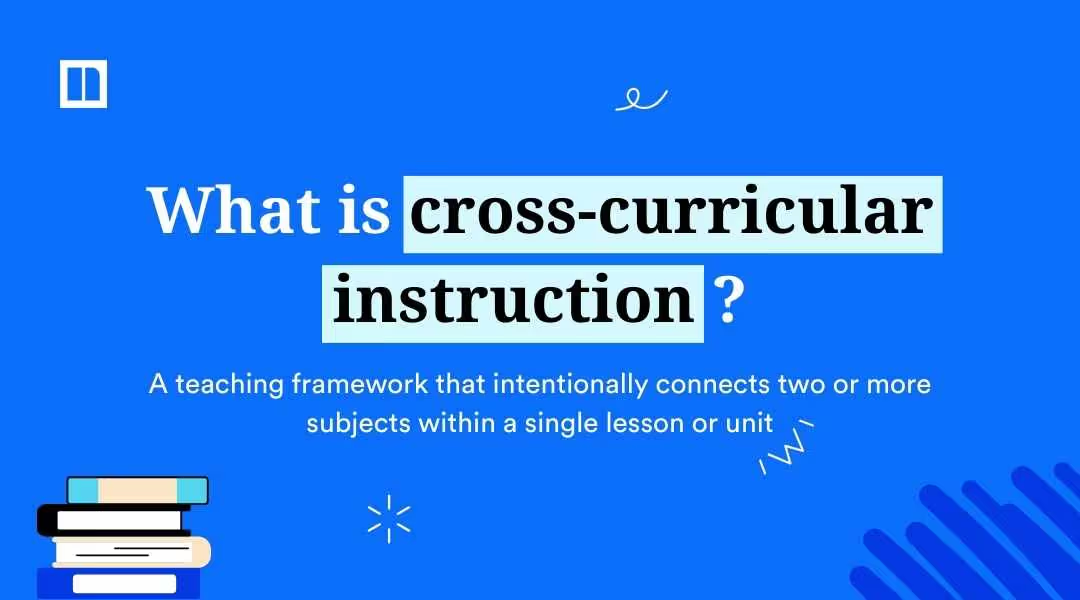
Cross-curricular instruction is a teaching framework that intentionally connects two or more subjects within a single lesson or unit. Students might read informational text, analyze data, and write an explanation about the same topic.
Each subject still follows its standards. The difference is that students use those skills together, helping them understand ideas more deeply rather than learning them separately.
Tools like Newsela ELA, Newsela Social Studies, and Newsela STEM support this approach by giving students access to informational texts, videos, data sets, projects, and other activities they can use and analyze across subjects.
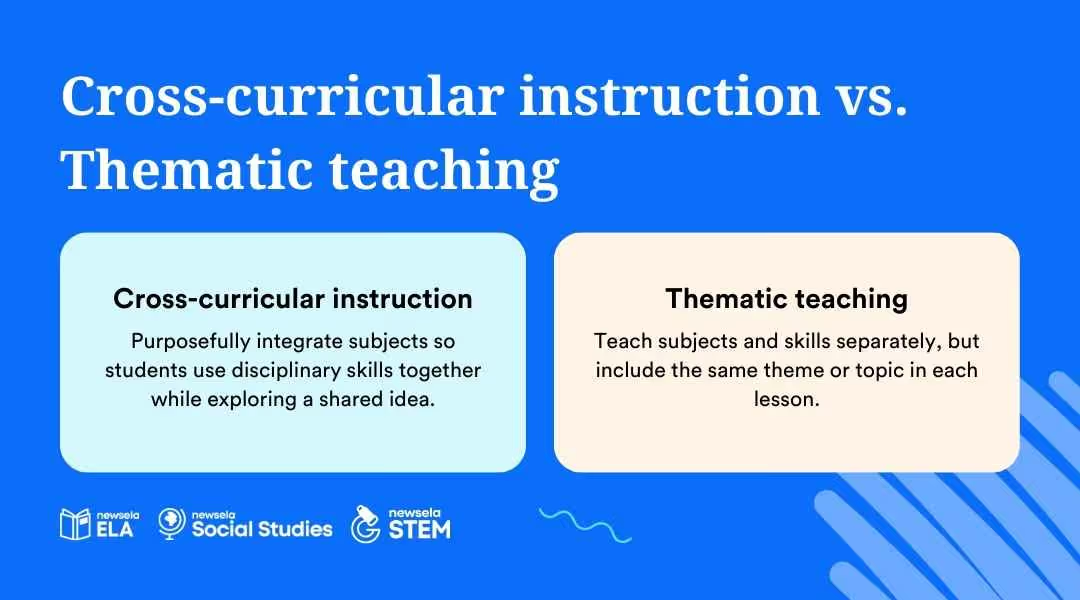
The difference between cross-curricular instruction and thematic teaching is skill integration.
Thematic teaching often organizes lessons around a topic like space, weather, or animals. You still teach the subjects and skills separately, but all the lessons have the same theme.
Cross-curricular instruction goes deeper. It purposefully integrates subjects so students use disciplinary skills together while exploring a shared idea.
Let’s use Earth Day as an example.
In a thematic unit, students might read an article about recycling in ELA. Then they do a water purification experiment in science. Finally, they do math problems involving average global temperatures.
In a cross-curricular lesson, those skills connect. Students aren’t doing separate tasks in separate blocks.
First, they may read about climate patterns and then analyze weather and temperature data to support the claims in the article. Then, they’ll write an evidence-based explanation of what they found.
The goal is to help students see how knowledge connects across subjects, not just across themes.
Key takeaways:
You probably already connect subjects informally in your lessons. You’ll reference a historical event while teaching a novel, or you analyze a data table while running a science experiment.
Cross-curricular instruction makes those connections more intentional and structured. When students use reading, writing, reasoning, and analysis together, learning becomes more meaningful. That’s why cross-curricular instruction often leads to stronger engagement and deeper understanding.
Students tend to engage more in class when they feel like learning has meaning and connects to their lives.
Cross-curricular instruction helps because students explore a real topic instead of jumping between unrelated tasks. They read about a problem, analyze information, and explain their thinking using multiple steps.
Research on deeper learning shows interdisciplinary lessons increase motivation because learners see how knowledge applies beyond a single subject. Instead of asking, “When will I use this?” students start to see how reading, writing, math, and science actually work together.
Cross-curricular instruction encourages students to look at problems from multiple perspectives.
Instead of completing isolated assignments, students analyze information, communicate ideas, and collaborate to reach conclusions.
Research on interdisciplinary learning showed that integrated lessons help develop the “4 Cs,” which are:
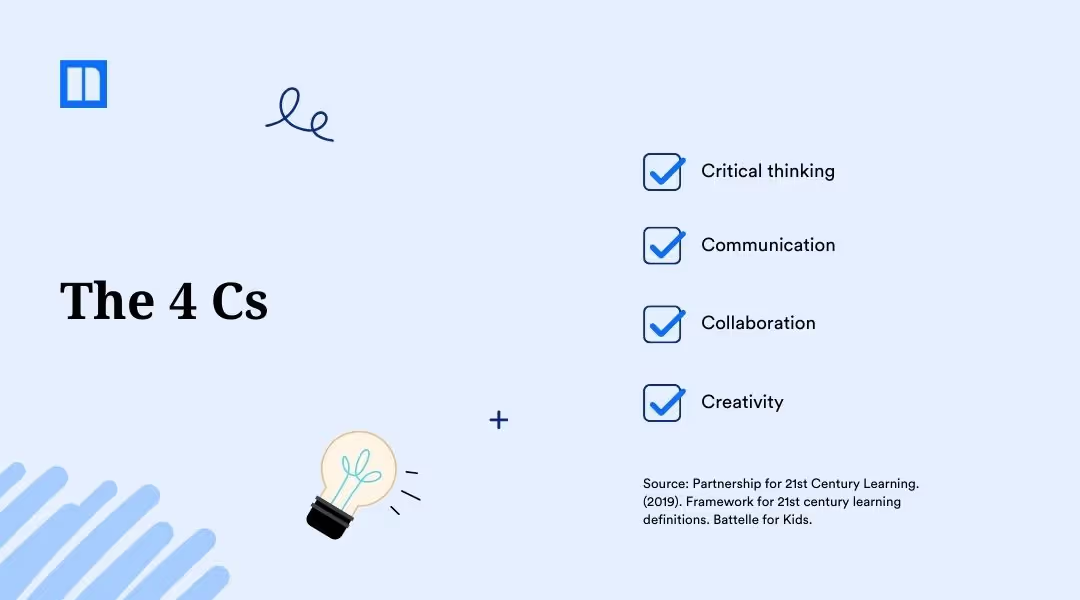
Students aren’t just recalling facts when doing cross-curricular learning. They’re using knowledge to think. When they do that, they tap into skills beyond basic recall.
Key takeaways:
Planning for cross-curricular instruction shouldn’t mean rewriting your entire curriculum. You don’t have to start big. Even small connections between two subjects can create meaningful cross-curricular learning. Let’s explore the ways to get it done in your classroom, on your schedule.
Start with a big idea or central question.
Topics like sustainability, inventions, or ecosystems naturally connect to multiple subjects. They give students something meaningful to explore while practicing different academic skills.
Research shows that themes or central questions help students connect knowledge across disciplines while maintaining academic rigor. This allows you to flow seamlessly in and out of subjects while covering multiple skills attached to the same topic.
Cross-curricular instruction often starts with simple alignment among teachers, especially in the older grades, where students switch classes for every subject.
For example, if you’re an ELA teacher talking with a social studies teacher, you may find out your middle schoolers are covering the Industrial Revolution in their history class. In your class, they’re also reading nonfiction texts about technology and innovation. That’s the perfect time to coordinate timelines, plan assignments together, and form a collaboration.
You might choose to have students analyze primary source documents in social studies and then write argumentative essays about those historical developments in ELA. This kind of aligned collaboration lets students practice subject-specific skills while exploring the same ideas across classes.
Reading and writing shouldn’t be limited to ELA classes.
Students need literacy skills in science, social studies, math, and technical subjects. Cross-curricular instruction helps because students practice reading complex texts and explaining ideas within real content learning.
Research backs it up. Studies show that comprehension improves when students read and write about subject matter rather than practicing isolated reading exercises.
Instead of treating literacy as something stuck in one class period, students should build reading and writing skills throughout the school day.
Project-based learning works well with cross-curricular instruction because real problems rarely fit into one content area. Students often need to research information, analyze data, test ideas, and communicate solutions. Those steps naturally draw on multiple disciplines.
For example, a class studying local water quality might test samples in science, calculate pollution trends in math, and present their findings in written reports or presentations. These types of activities give students a reason to use what they learn across subjects.
Key takeaways:
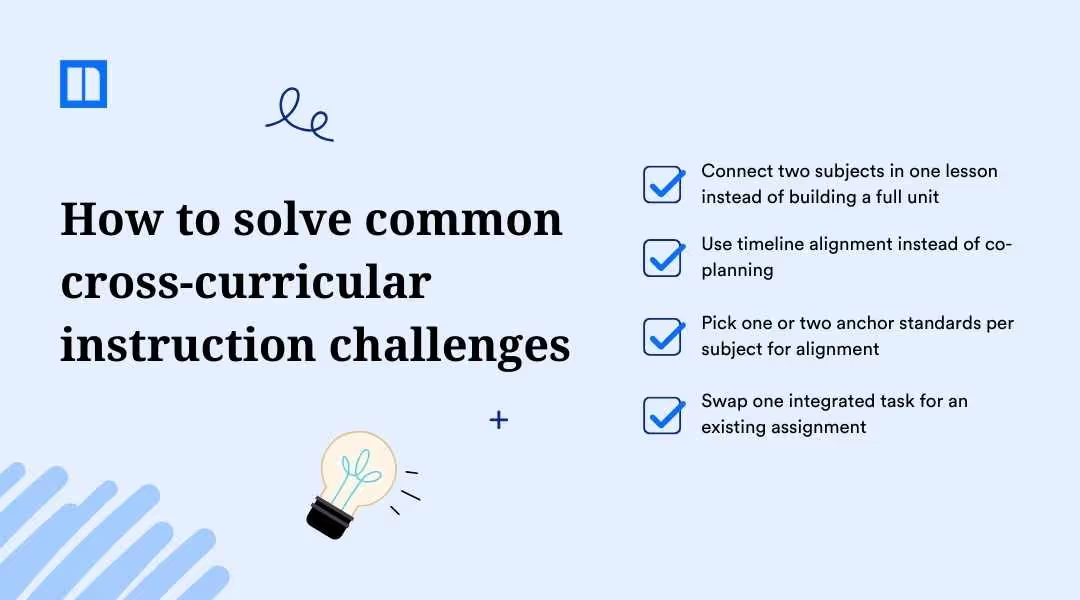
Even though cross-curricular instruction has many benefits, you might be hesitant to try it. What if you can’t collaborate with other teachers? What if there’s not enough time to plan, or you stray too far from the pacing guide?
The good news is that most cross-curricular challenges have simple solutions or swaps you can use to ease into it rather than overhauling everything from the beginning.
If you didn’t get special training on how to plan lessons across multiple subjects, you’re not alone. Your curriculum maps, pacing guides, and standards are usually organized by discipline, which makes it feel as if subjects should stay separate.
Instead of trying to connect everything at once, start by identifying one natural overlap between two subjects. For example, a social studies unit on industrialization might align with informational writing skills in ELA.
Cross-curricular instruction doesn’t always require team planning. You probably already integrate subjects (even minimally) into your classrooms by embedding literacy, data analysis, or research skills into other content lessons. This approach is often called literacy across the curriculum, where reading and writing support learning in every subject area.
If you want to work with other teachers or classrooms but can’t find time to plan full lessons or units together, try aligned collaboration. In this model, you can align timelines instead of lessons. For example, if you know students will be learning about the American Revolution in the fall in their history classes, you may choose to read the novel “My Brother Sam Is Dead” at the same time in ELA.
Not only does this keep a central theme throughout all their learning, but it also creates opportunities for teachers to share texts, writing prompts, and activity ideas with one another, without needing a full collaboration strategy session.
Standards often feel like one of the biggest barriers to cross-curricular instruction. The solution is to start with the standards instead of the project.
Look for overlapping skills across subjects. Many standards already require similar thinking, like analyzing evidence, interpreting data, or explaining reasoning.
For example, an ELA standard might focus on evaluating informational texts, while a science standard asks students to analyze experimental results. A single assignment can address both if students read scientific findings and write an evidence-based explanation.
Planning around one or two anchor standards per subject keeps cross-curricular instruction focused and prevents lessons from drifting away from your required curriculum goals.
Pacing guides may make cross-curricular instruction feel like extra work. But it doesn’t have to be. The trick is to avoid adding new lessons and instead, replace an existing assignment with one that connects subjects.
For example, if you already plan to have students write an informational essay, the topic could come from a science investigation or a social studies unit. The writing task stays the same, but the content connects to another subject.
This approach keeps pacing intact while allowing students to apply skills across disciplines.
Key takeaways:
If a project connects science, writing, and data analysis—or any other combination of subjects and standards—how can you grade it fairly?
The key is remembering that cross-curricular instruction doesn’t mean grading everything at once, or putting all the responsibility on one teacher, if you’ve collaborated on an assignment.
When assessment expectations are clear, cross-curricular projects become much easier to evaluate.
Cross-curricular assessments should focus on disciplinary skills, not just the final product of the assignment.
Students may complete one project, but each subject should still be represented so you can evaluate the skills it teaches. That might include analyzing evidence, interpreting data, constructing an argument, or explaining reasoning.
Research backs this up. Studies on interdisciplinary instruction recommend assessing subject-specific thinking skills within shared tasks, rather than grading a project on a single combined score. This keeps cross-curricular learning rigorous, while also making grading and scoring clearer for everyone.
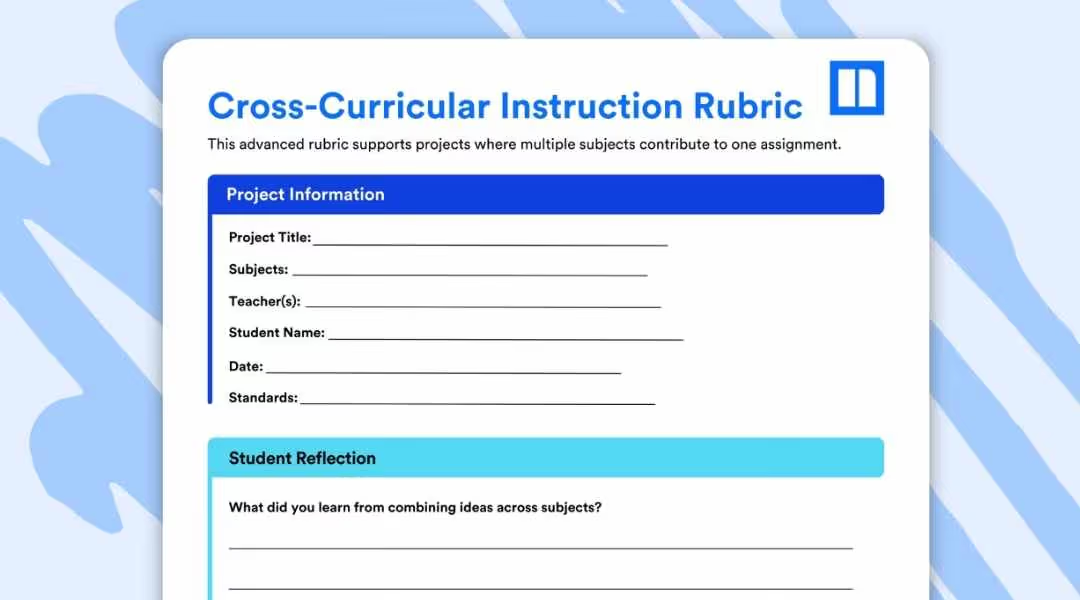
Once you know what skills you’re assessing, the rubric becomes much easier to build.
Start by creating separate criteria for each subject involved in the assignment. Each section of the rubric should align with the standards or skills that the discipline is responsible for evaluating. For example, a cross-curricular project might include rubric categories like:
This approach keeps expectations clear and prevents one subject from overshadowing the others.
Download your printable: Cross-Curricular Instruction Rubric
When you’re collaborating with other teachers on a cross-curricular project, the easiest way to approach assessment is to grade by discipline.
Each of you evaluates the skills tied to the subjects you teach and that subject’s standards. The ELA teacher might score argument structure and use of evidence. The science teacher might assess the accuracy of scientific reasoning or data interpretation.
This approach keeps grading manageable and ensures that each subject maintains its academic expectations.
Key takeaways:
Cross-curricular instruction can blossom when school or district leaders create the right conditions for collaboration.
Teachers may already be connecting subjects in small ways, but admin support can make those connections easier to sustain across departments, or even across buildings.
Research also shows that school leadership plays an important role in creating systems that allow teachers to coordinate and plan for cross-curricular instruction. When admins prioritize promoting literacy, critical thinking, and shared topics across classrooms, cross-curricular instruction becomes easier to implement.
Admins don’t need to launch a brand new program to support cross-curricular instruction across schools or the district.
One of the most effective steps you can take is to protect teacher collaboration time. Shared planning periods or professional learning communities (PLCs) give teachers the time and space to align on topics, texts, and projects across subjects.
Leaders can also encourage shared instructional resources. When multiple departments use the same articles, data sets, or real-world topics, it becomes much easier to connect learning across classes.
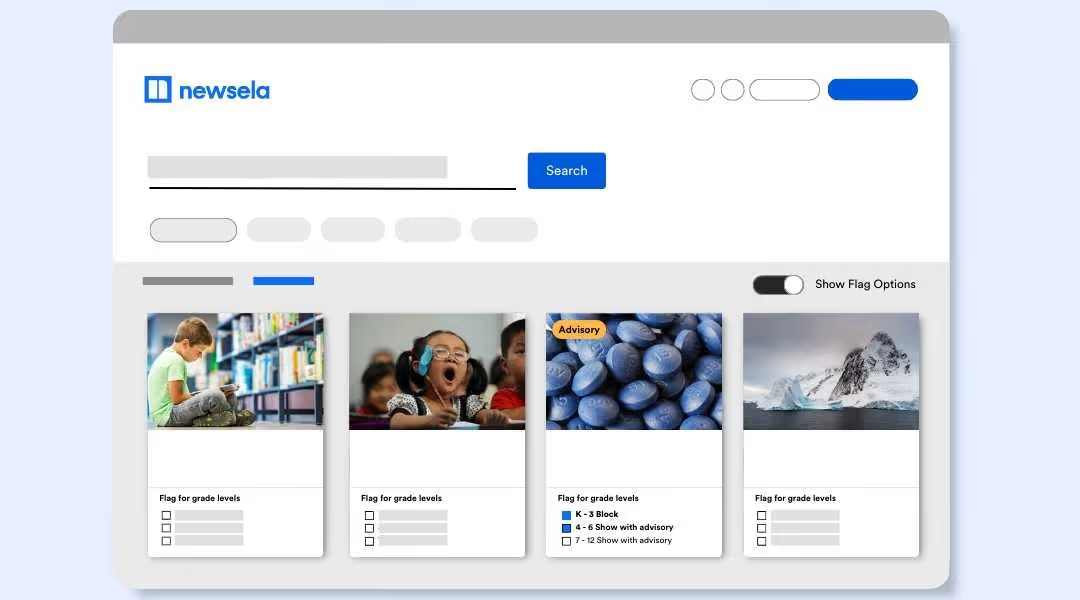
For example, when your school or district uses Newsela, you have access to Content Promotion. This feature allows you to spotlight curated articles or resources directly on a teacher’s home page. This can help multiple departments explore the same topics across subjects.
Cross-curricular instruction doesn’t require a full curriculum redesign. A shared topic, a research question, or a writing assignment tied to another class can be enough to help students see how ideas connect. Over time, those small connections build stronger interdisciplinary learning.
When students read, analyze information, and explain their thinking across subjects, learning becomes more meaningful and more relevant to the real world.
If you’re looking for ways to support cross-curricular instruction in your classroom, try Newsela’s suite of high-quality instruction and assessment and analytics products. With leveled informational texts and instructional resources that you can use across subjects, it’s the perfect resource to help you start and grow a cross-curricular initiative—without the extra prep time.
You can explore how Newsela supports literacy and cross-curricular learning by creating a free account and claiming your 45-day trial.


Learn how to build media literacy, digital media literacy, social media literacy, and AI literacy in your K-12 classroom.

Learn how to teach text structure with clear strategies, examples, and classroom activities that build reading comprehension and stronger writing skills.

Find practical test prep tips for teachers using data, differentiation, and Newsela resources to boost student confidence and performance.


.jpg)
.jpg)