Products

 Products Overview
Newsela products are purpose-built to unlock student motivation, inspire teachers, and drive long-lasting learning outcomes.









Resources
About
Products OverviewNewsela products are purpose-built to unlock student motivation, inspire teachers, and drive long-lasting learning outcomes.

Students don’t always struggle with what they’re reading. Often, they struggle with the organization of information. When texts don’t follow a familiar pattern, comprehension breaks down, especially in nonfiction across ELA, science, and social studies.
Teaching text structure helps students recognize patterns in writing, so they can better understand what they read and organize their writing. When structure becomes visible, reading feels less overwhelming, and writing becomes more intentional.
Jump to:
Key takeaways:
Text structure is the way an author organizes information in a text. It goes beyond beginning, middle, and end. The structure shapes how we group, connect, and explain ideas so readers can understand the main idea and key details more easily.
When students recognize text structure, they can follow the author’s thinking rather than get lost in the details. This makes complex nonfiction texts feel more predictable and easier to navigate across grade levels and subjects.
Text structure refers to how you organize ideas, while text features help readers locate or highlight information. Headings, captions, diagrams, and bold words are text features. They support reading, but they don’t explain how ideas relate to one another.
Helping students separate structure from features prevents a common misconception. When students focus on the organization of ideas rather than just what they see on the page, they develop stronger comprehension and analytical skills.
Key takeaways:
Teaching text structure gives students a way to make sense of complex texts. When students recognize familiar patterns, they can anticipate what information will come next and monitor their understanding as they read.
This skill matters beyond ELA. Science explanations, historical accounts, and technical texts all rely on clear organization. When students understand structure, they’re better prepared to read, learn, and write in every class.
When students understand how a text is organized, reading becomes less of a guessing game. Recognizing patterns such as cause and effect or problem and solution helps students anticipate what will come next, making it easier to connect ideas and remember key information.
Research backs this up. Studies show that explicit instruction in text structure improves reading comprehension, especially for informational texts. Students learn how ideas fit together instead of reading sentence by sentence. When the structure is clear, students spend less energy figuring out how the text works and more energy understanding what it says.
For students who struggle with reading, text structure gives them a reliable access point into a text. When they know what pattern to expect, like sequence or cause and effect, they can focus on key ideas instead of getting lost in details.
Research shows that instruction in text structure helps students improve reading comprehension by providing a mental framework for organizing information and identifying key ideas, especially in informational texts.
Text structure shows up everywhere. Science articles explain causes and effects. Social studies texts compare events or describe timelines. When students recognize these patterns, they transfer comprehension skills across subjects and read more independently.
Key takeaways:
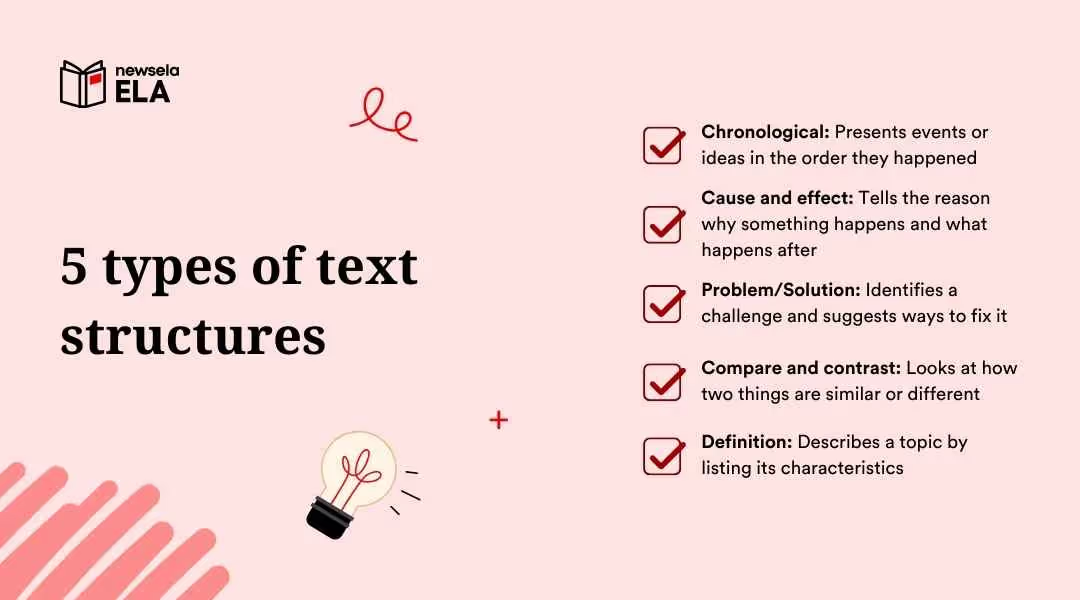
While authors may combine structures in longer pieces, most K-12 instructional texts focus on five core patterns. Teaching students to recognize these structures helps them understand how ideas are grouped and why information is presented the way it is.
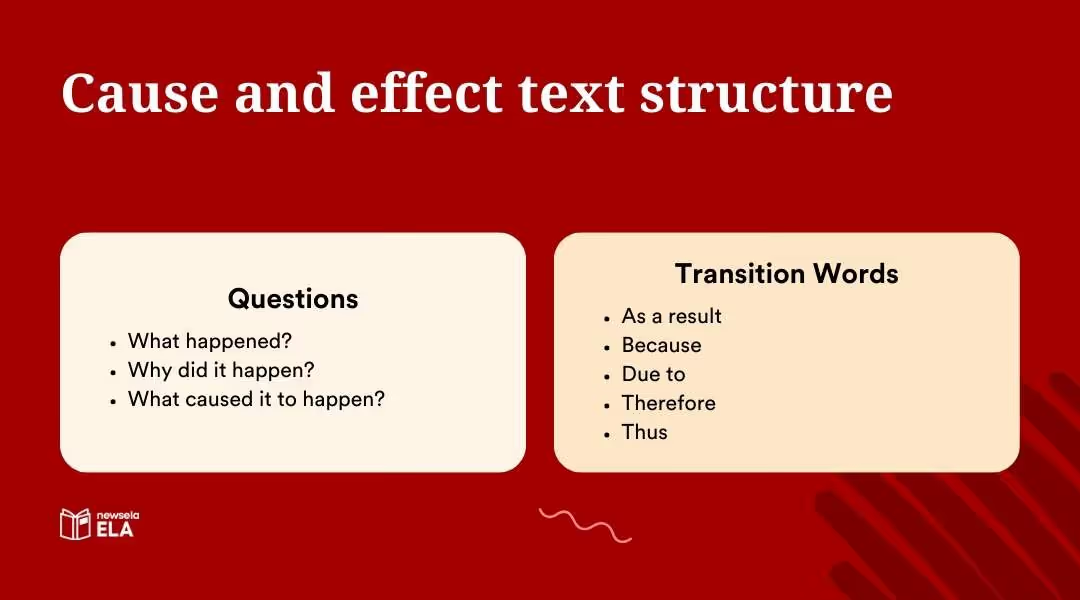
The cause-and-effect text structure explains why something happens and what happens as a result. In this type of text, ideas are connected by relationships, not just listed as facts. Students learn to look for reasons, outcomes, and chains of events that show how one idea leads to another.
A science-focused article like “Big Questions: Why does sugar taste so good?” is a strong mentor text for this structure. The author explains why humans crave sugar: It fuels our cells, and helped early humans survive. Then it shows the effects of that craving today: Higher sugar consumption and health problems.
As students read, they can trace how biological needs lead to behaviors, and how those behaviors lead to consequences. This makes cause-and-effect relationships visible. This kind of text helps students move beyond surface-level comprehension. Instead of memorizing facts about sugar, they practice identifying relationships between ideas, a skill they’ll use across science, social studies, and nonfiction reading.
Grab your graphic organizer: Cause and Effect Worksheet
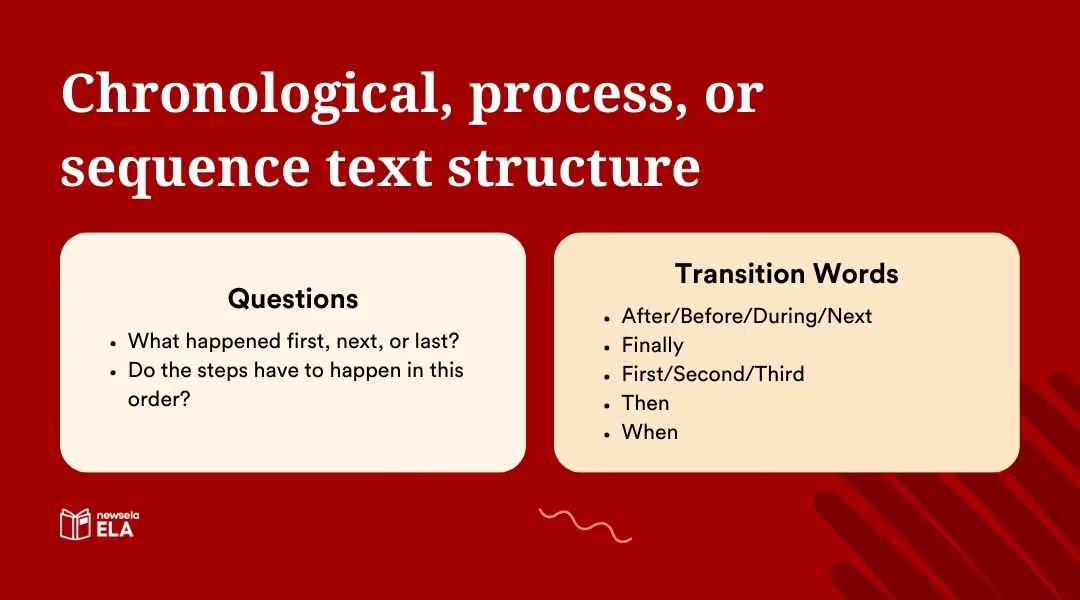
Sequence, or chronological, text structure explains events or steps in the order they happen. This structure helps readers understand what comes first, what follows, and what comes next. It’s especially useful for texts with procedures, plans, and processes.
An article like “How to plan a big project” works well as a mentor text for this type because the organization does the heavy lifting. The author walks readers through a clear set of steps. Signal words like first, then, and when help students track the order and see how each step builds on the one before it.
Using a text like this helps students see that sequence isn’t just about time, but also about logic and planning. When students recognize this structure, they’re better able to follow directions, summarize processes, and write their own step-by-step explanations in ELA, science, and social studies.
Grab your graphic organizers: Flowchart and Timeline
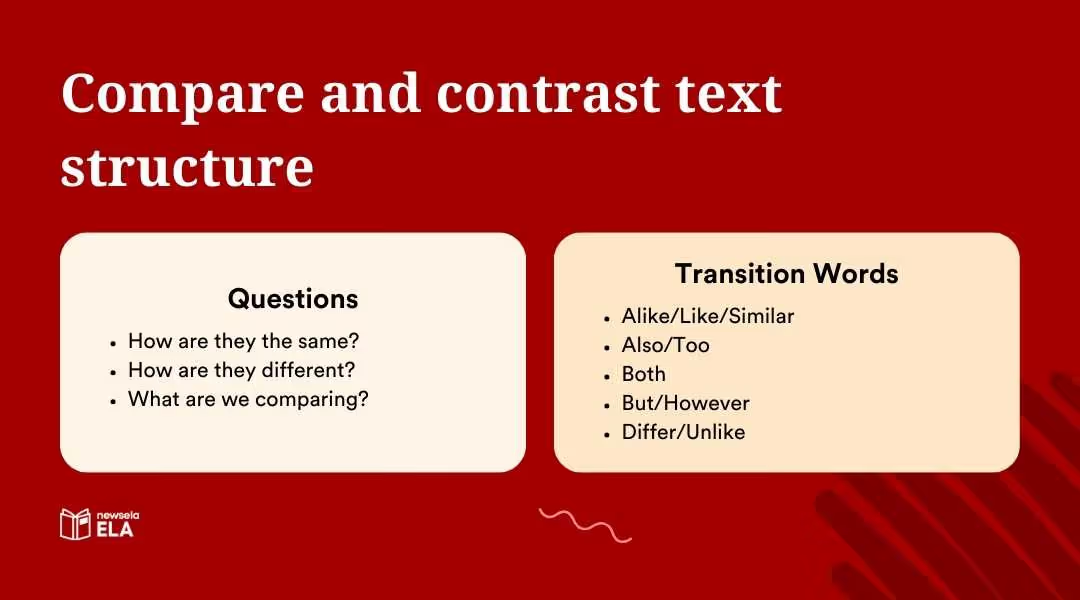
Authors use the compare-and-contrast text structure when they want readers to understand how two or more ideas are similar and different. Instead of explaining concepts one at a time, the author places them side by side so readers can examine their relationship more closely.
An article like “The difference between empathy and sympathy” is a strong mentor text because it focuses on comparison. The author defines empathy and sympathy separately, then repeatedly contrasts how they work, how they feel, and how they affect people differently.
This structure helps students slow down their thinking. Rather than memorizing definitions, they learn to evaluate ideas, weigh distinctions, and organize information so it supports deeper understanding. Compare-and-contrast texts like this are especially useful in ELA and social studies, where students are often asked to analyze perspectives, concepts, or arguments.
Grab your graphic organizers: Venn Diagram and T-Chart
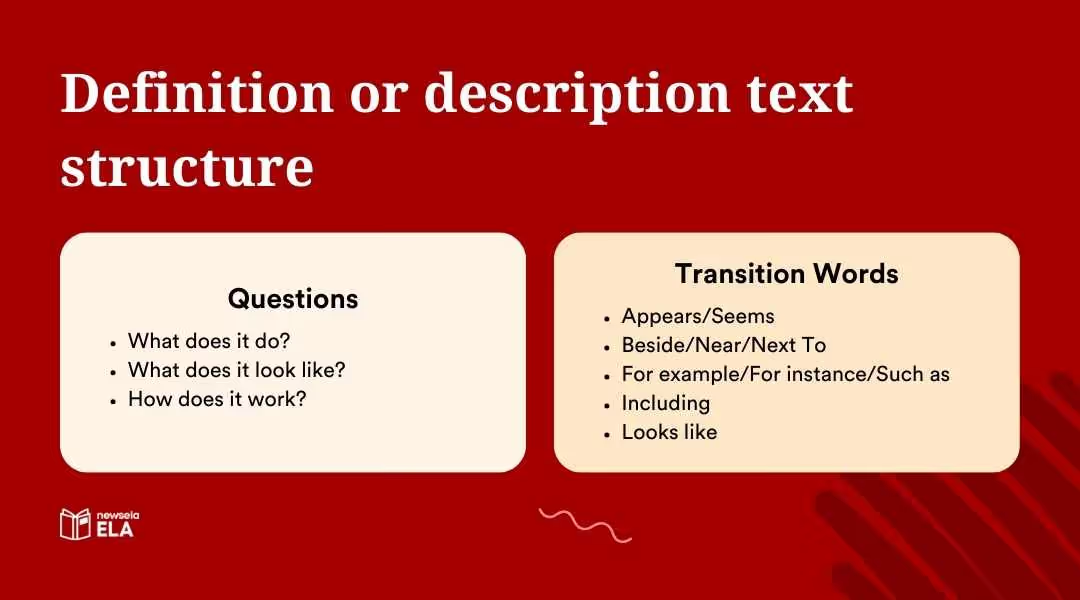
Definition or description text structure explains a topic by describing what it is, what it does, and what it includes. Instead of telling a story or comparing ideas, the author builds understanding by layering details, examples, and explanations around a concept.
An article like “Explainer: What is a gene?” works well as a mentor text because it helps readers understand a single idea more clearly. The author defines a gene, explains where the term came from, and provides examples and analogies to clarify a concept that could otherwise be overwhelming. Each section adds another layer of description, deepening understanding without changing the main focus.
This structure is especially helpful when students are learning new vocabulary or topics. By recognizing definition and description text structure, students learn how authors introduce unfamiliar ideas and support them with details. These are skills they can use when reading complex texts and when explaining topics in their own writing.
Grab your graphic organizer: Web Chart
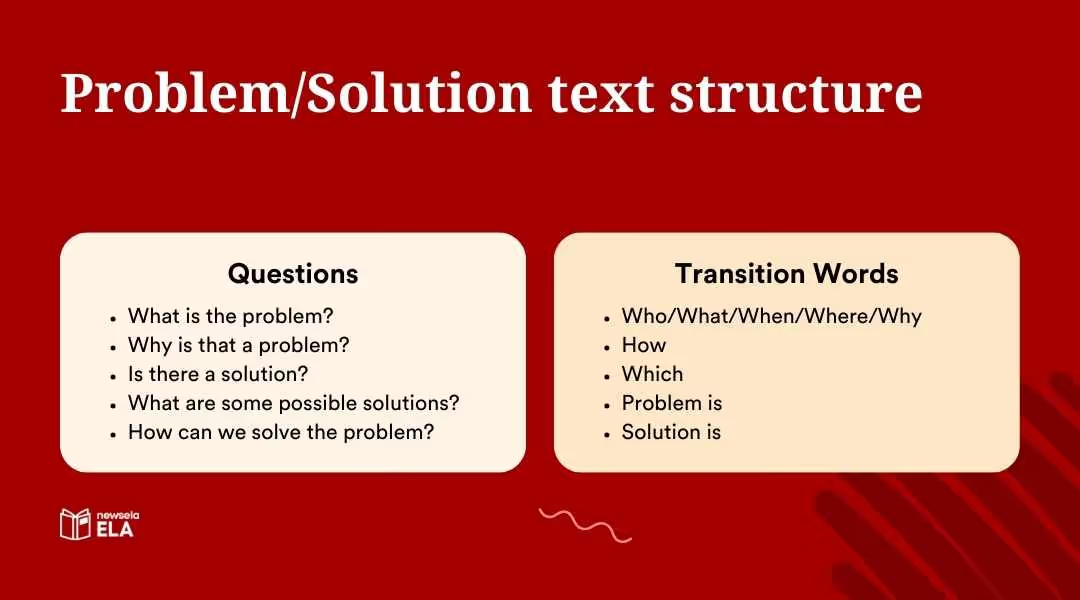
Problem-and-solution text structure presents a specific challenge and then explores ways to address or reduce it. Unlike cause-and-effect, which explains what happens and why, problem and solution focus on what can be done in response to an issue.
The article “Video games are a ‘great equalizer’ for people with disabilities” is a strong mentor text because it clearly frames a problem—that many video games are difficult or impossible for people with disabilities to play—and then highlights multiple solutions. The text doesn’t suggest there’s one perfect fix, but it shows how different solutions work together to improve access.
This type of structure helps students understand that real-world problems are often complex. By identifying the problem first and then tracking how solutions are proposed and implemented, students practice analyzing arguments, evaluating effectiveness, and recognizing how authors organize ideas to advocate for change.
Grab your graphic organizer: Problem-Solution Worksheet
Key takeaways:
Text structures don’t live in isolation. Authors use the same organizational patterns across many types of texts, even though the purpose and format may change. Showing students how structure appears in different text types helps them recognize patterns more quickly and apply what they’ve learned more independently.
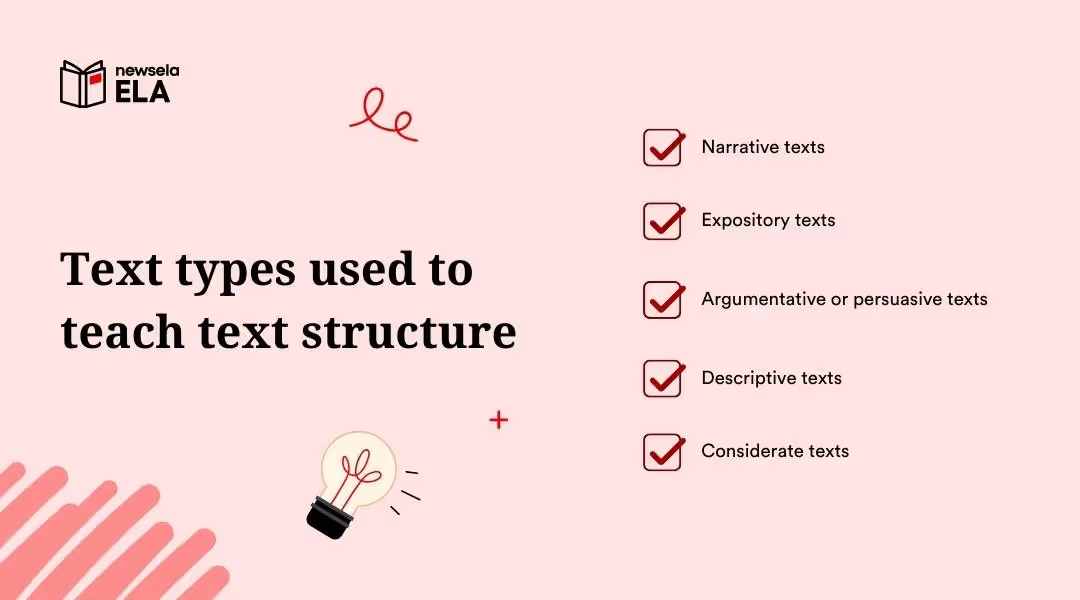
Narrative texts tell a story, but still rely on structure. Events often follow a sequence, characters face problems, and actions lead to consequences. Even when students read fiction, they can practice identifying how ideas are organized to move the story forward.
Grab your graphic organizer: Story Elements Plot Diagram
Expository texts are designed to explain information clearly, which makes the text structure easier to spot. Science and social studies articles often use cause-and-effect, compare-and-contrast, or descriptive text structures to present ideas. These texts are especially helpful for modeling structure in informational reading.
Argumentative texts often blend structures to support a claim. An author might describe an issue, compare viewpoints, and then propose a solution. Helping students identify these shifts builds critical reading skills and prepares them for more complex analysis in upper grades.
Descriptive texts focus on helping the reader understand what something is like. They often rely on definition or description structure, using details and examples to build understanding. These texts are especially helpful when introducing new concepts or vocabulary.
Procedural texts explain how to do something step by step. Recipes, experiments, and instructions all rely on a sequential text structure. These texts make chronological structure concrete and useful across subjects, including science and math.
Considerate texts are written to be easy to follow. They use clear organization, headings, visuals, and transitions to make the structure more visible. These texts are especially helpful for learners who benefit from additional support, including multilingual learners.
Key takeaways:
Teaching text structure doesn’t require a brand-new unit. Small, intentional, and consistent moves can make a big difference in how students read and organize information.
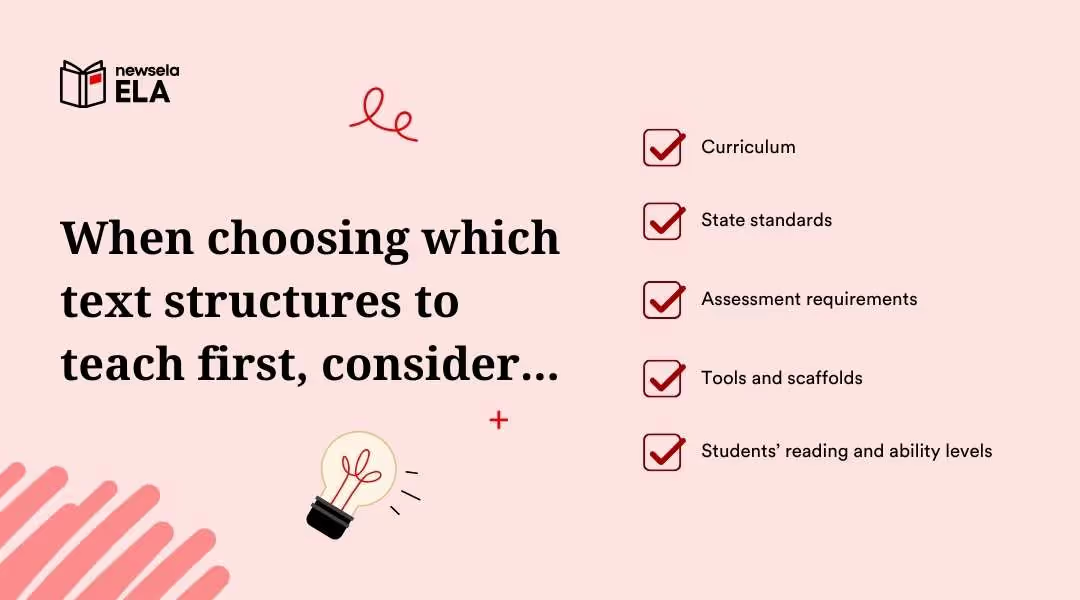
It’s usually most effective to start with description or sequence text structures. These feel familiar and appear often in early texts. From there, you can move into cause and effect, followed by compare and contrast, then problem and solution, as students gain confidence. Teaching one structure at a time helps students focus on patterns instead of labels.
Graphic organizers act as a visual map of the text. When students sort information into a timeline, chart, or web, they can see how ideas connect and how the structure shapes meaning. The goal isn’t filling in the boxes. It’s to help students understand why the information belongs where it does.
You can use the printable graphic organizers we’ve shared throughout this article. Or use Luna AI-powered graphic organizers in Newsela ELA to generate pre-populated, editable worksheets directly from an article. These organizers pull in key ideas, vocabulary, and details from the text, giving students a clear starting point while still leaving room for analysis, discussion, and revision.
Signal words can help students notice patterns, but they aren’t foolproof. Authors don’t always use clear transitions, and many texts include multiple text structures. Teaching students to look at relationships among ideas, not just keywords, leads to deeper comprehension and prevents overgeneralization.
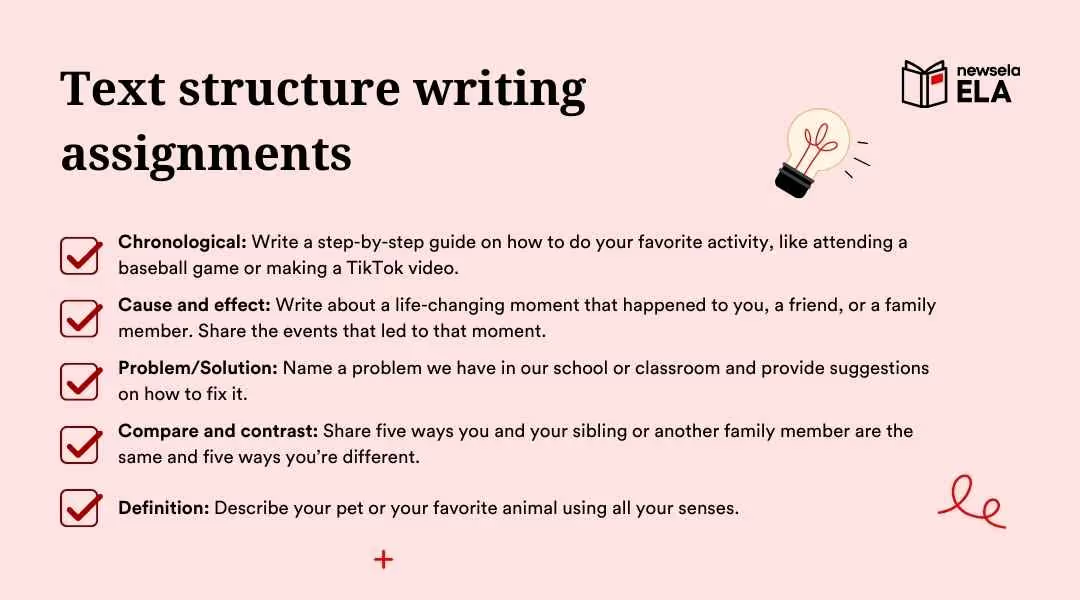
Writing helps students internalize text structure. When students write a short paragraph using a specific structure, they experience how organization shapes meaning. Even brief writing tasks strengthen both reading comprehension and written expression.
Key takeaways:
Once students understand what text structure is, engaging activities help them apply that knowledge in meaningful ways. The goal is to give students multiple chances to notice, test, and explain how to organize ideas.
Before reading, ask students to scan headings, visuals, and opening paragraphs to predict the text structure. As they read, they collect evidence to confirm or revise their thinking. This keeps students actively engaged and reinforces the idea that structure can be identified before full comprehension sets in.
Text structure scavenger hunts ask students to find examples of different structures across articles, books, or media. Instead of working with a single passage, students compare texts and notice how the same structure appears in different contexts. This helps move learning from recognition to transfer.
Rewriting a passage using a different structure forces students to think about organization, not just content. For example, turning a cause-and-effect article into a problem-and-solution paragraph helps students see how structure changes meaning. This activity strengthens comprehension and supports writing development at the same time.
Key takeaways:
Teaching text structure works best when students can focus on how ideas are organized, not just what a text says. Using consistent, well-scaffolded content helps make structure visible without overwhelming students.
Newsela ELA offers a wide range of nonfiction texts that naturally lend themselves to text structure analysis. When you search, articles are tagged by skill, making it easier to select texts that align with the structure you’re teaching. Multiple reading levels allow students to engage with the same organization and ideas, even when their reading abilities differ.
This consistency helps students focus on the key goals of text structure instruction, like identifying patterns, relationships, and organization. And they can do it while building background knowledge in ELA, science, and social studies topics.
Luna, your AI-powered assistant, helps you plan and adapt text-structure lessons more efficiently. Using Luna features, you can generate discussion questions, writing prompts, and graphics organizers tied directly to an article’s content and structure. These tools give students entry points to the content while allowing you to adjust support levels as needed.
Text structure gives students a way to understand how ideas fit together, no matter the subject or grade level. When structure is visible, students read with more purpose, write more clearly, and approach complex topics with greater confidence.
You don’t have to overhaul your curriculum to teach text structure well. Start with one structure, one strong text, and a few intentional strategies. With Newsela ELA and Luna’s AI-powered tools, you can support text structure instruction while meeting students where they are.
Ready to get started? Sign up for Newsela Lite and explore a free 45-day trial to access leveled texts, skill-based scaffolds, and tools that make teaching text structure easier and more effective.


Discover why it’s important for students to learn how to connect ideas in a text and tips to help them master this literacy skill.

Discover how to teach reading comprehension in your classroom to help your students master literacy skills and continue their journey of reading to learn.

Learn how to teach cause-and-effect relationships using lessons and activities that make the concept clear for your students.


.jpg)
.jpg)