
Products

 Products Overview
Newsela products are purpose-built to unlock student motivation, inspire teachers, and drive long-lasting learning outcomes.









Resources
About
Products OverviewNewsela products are purpose-built to unlock student motivation, inspire teachers, and drive long-lasting learning outcomes.

You’ve definitely seen it happen: A student read an entire passage and then, when you ask them what it was about… *crickets.*
This is where strong reading strategies for elementary students come in handy. When students learn to ask questions, visualize, and summarize while they read, comprehension improves, and conversations about texts become much stronger.
Jump to:
Key takeaways:
Even when students can read the words on a page, comprehension doesn’t always follow.
Many elementary students can read all the words in a passage but struggle to explain its meaning. That’s often because they haven’t learned how to think while reading. That’s where you can use elementary reading strategies.
They give students a set of mental tools to use that help them understand a text. Instead of reading passively, students begin to question ideas, visualize what’s happening, and connect information across the passage.
Researchers have identified several comprehension strategies that improve students' understanding of texts, including:
Over time, strong readers use these strategies automatically. In elementary classrooms, your goal is to help students practice a small set of powerful thinking moves they can use across different texts and subjects.
Key takeaways:
Students in kindergarten through second grade are still building foundational reading skills like decoding, phonics knowledge, and fluency. Because of that, strategies need to support both word recognition and comprehension.
When you focus on a few simple strategies that help students understand what they read while they’re still learning how written language works, you can build their skills without overwhelming them.
Many effective early reading strategies involve modeling, oral reading, and discussion. These activities help students connect sounds, words, and meaning while building confidence as readers.
Popular K-2 elementary reading strategies include:
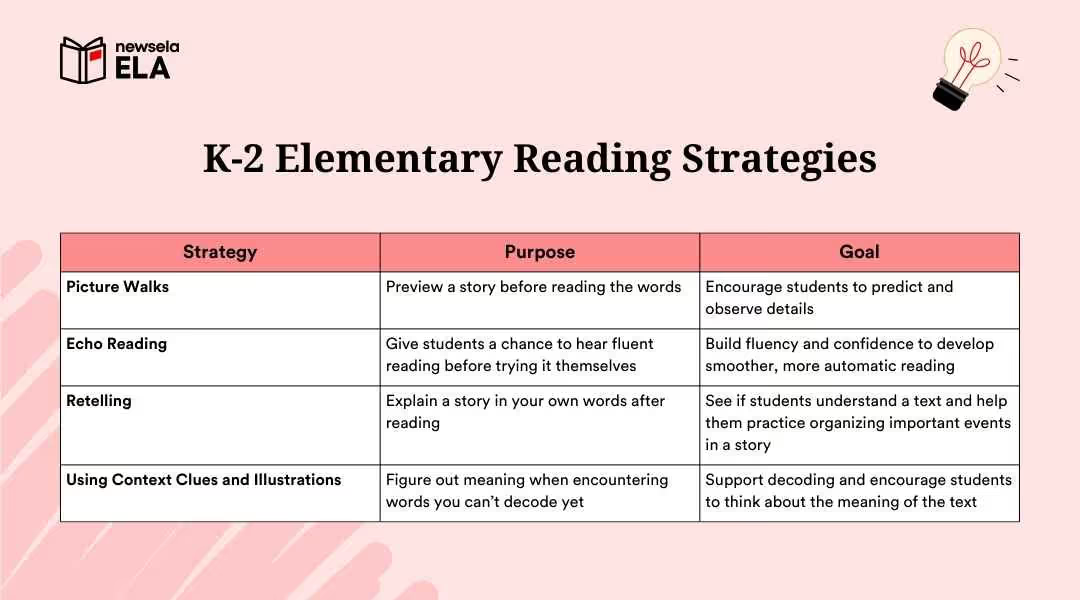
A picture walk helps young readers preview a story before reading the words.
With this strategy, you guide students through the illustrations and ask simple questions about what they notice. This helps students activate background knowledge and start thinking about the story.
These questions encourage students to predict and observe details, two important reading habits.
Picture walks are especially helpful for early readers because illustrations often provide context clues for unfamiliar words. They also help students approach text with curiosity and confidence, making the reading experience smoother as students begin decoding words.
Echo reading gives students a chance to hear fluent reading before trying it themselves. During this activity, you read a sentence or short passage aloud first. Then students repeat it back, copying the pacing, expression, and phrasing they just heard.
This simple routine helps young readers practice several skills at once:
Researchers often recommend this type of guided oral reading to improve fluency. Echo reading also helps students build confidence. When they read immediately after hearing a fluent model, they’re more likely to read the passage successfully.
Over time, this strategy can help students develop smoother, more automatic reading.
Retelling asks students to explain a story in their own words after reading. This simple strategy helps you see whether students understood the text. It also helps students practice organizing the important events from a story.
With early readers, retelling usually focuses on key ideas, like:
Retelling also encourages students to speak about texts using their own words, which helps reinforce understanding and build confidence as readers. You can support retelling by using prompts or visuals to guide students as they practice this new skill.
Early readers often encounter words they can’t fully decode yet. When that happens, you can teach students to use context clues and illustrations to identify the word. For example, if a student struggles with a word in a sentence, you might ask:
Illustrations are especially helpful when using picture books because they often provide clues about characters, actions, and settings beyond the text. Using context clues works best when supporting decoding. Students should still practice sounding out words whenever possible.
This approach encourages students to think about the meaning of the text, not just the letters on the page. When you guide students to combine phonics, context, and illustrations, young readers gain multiple tools to build comprehension.
Key takeaways:
By upper elementary school, many students can read independently. At this stage, strong readers begin using strategies that help them analyze information, connect ideas, and monitor their own understanding while reading.
Many evidence-based reading strategies focus on helping students interact with a text. These include:
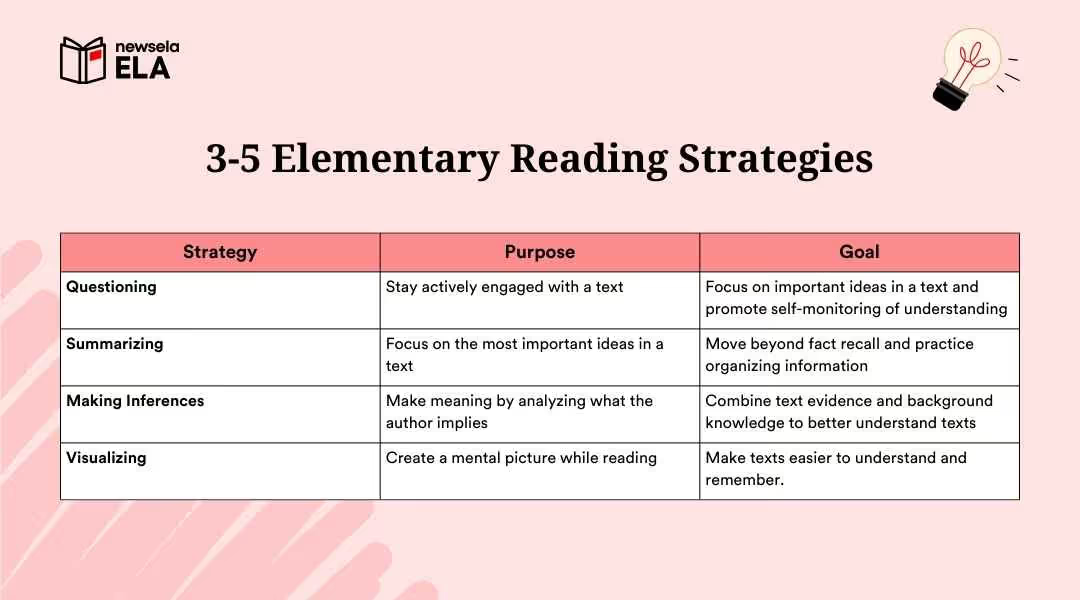
Research on reading comprehension highlights that students benefit when you explicitly model these strategies and provide opportunities for guided practice. Over time, these strategies become habits that students use automatically when they read more complex texts.
Asking questions while reading helps students stay actively engaged with a text. Instead of passively moving through a passage, students pause to think about what the author is saying and why it matters.
You can model this strategy by asking questions during read-alouds, or guided reading, like:
These questions help students slow down, focus on important ideas in the text, and build a coherent mental representation of what they’re reading.
Questioning also helps students monitor their own understanding. If something doesn’t make sense, students learn to stop and reread or look for clues in the passage. Over time, strong readers will start to ask these questions automatically and recognize when they don't understand something. They’ll then go back and re-read or use a strategy to address their gaps in understanding before continuing to read.
Summarizing helps students focus on the most important ideas in a text. When students summarize, they identify key details and explain the main idea in their own words. This forces them to think about what information truly matters. You can guide summarizing with prompts like:
These prompts encourage students to move beyond simply recalling facts and instead work on organizing the information they read.
Summarizing also works well as a short writing activity. Even a quick two- or three-sentence summary can help students process what they’ve read. Practice with this strategy helps students become more confident readers who can quickly recognize central ideas in a text.
Read more: Summarizing in Reading: Help Students Get To The Point
Making an inference means using clues from the text plus what you already know to figure something out. Authors don’t always state every detail directly. Instead, readers have to look between the lines to make meaning.
For example, if a line in the story says, “Sally saw the darkened sky and grabbed her umbrella before going out for a walk,” this is a chance for strong readers to make an inference. The author doesn’t say it, but dark skies and grabbing an umbrella tell readers that it’s going to rain in the story, even if it’s not explicitly stated.
You can model inference by pausing during reading to ask questions like:
These prompts help students learn to combine text evidence and background knowledge to better understand complex texts.
You can also support this strategy by asking students to point to the clues in the text that helped them make their inference. This habit will encourage students to think more deeply about the ideas and relationships in a passage. Plus, many state tests explicitly assess students' ability to support their claims and inferences with evidence from the text, so it doubles as test prep.
Visualization helps students create a mental picture while reading. When students picture the setting, characters, or events in a story, the text becomes easier to understand and remember. You can introduce this strategy by modeling it aloud and showing students how to turn words into a scene in their minds.
Visualization works well with descriptive texts. Students can pause and describe what they imagine happening in the scene. You may also ask your students to sketch a drawing of what they visualize while reading. This activity encourages students to slow down, get creative, and think carefully about the details in a text.
Key takeaways:
These common questions come up frequently when planning literacy lessons and having discussions with fellow teachers. The answers can help you integrate reading strategies more naturally into any area of instruction.
Students learn reading strategies best when they see how a skilled reader thinks through a text. That’s why modeling and think-alouds are so effective.
During a think-aloud, you’ll pause while reading and explain what you’re thinking. For example, you might say things like:
These comments show students that reading involves active thinking, not just saying words correctly.
The key to modeling is to keep it brief and natural. You don’t need to stop at every sentence. You just want to highlight how to make what would typically be invisible thinking visible to students.
After modeling, students should have time to practice the same strategy with guidance, then try it independently. This format will help them begin to use these strategies on their own while reading new texts.
Students should practice reading strategies independently after they’ve seen them modeled and tried them with support. The “I do, we do, you do” model fits best here. Its steps are exactly as the name suggests:
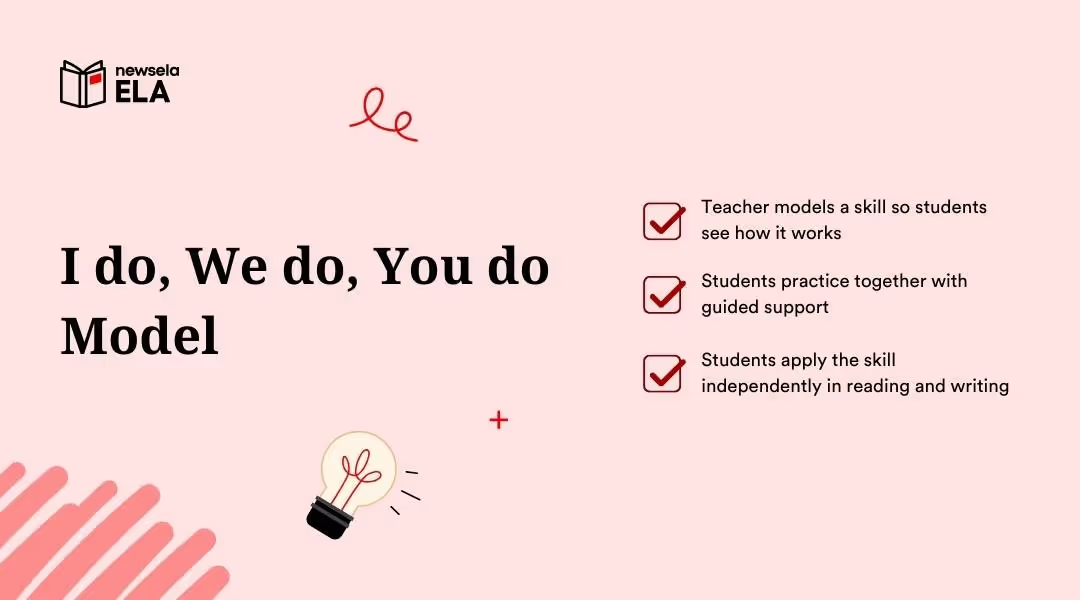
This gradual release approach helps students understand both how and when to use a strategy. For example, after modeling questioning during a shared reading, students might pause during independent reading to write or discuss a question about the text.
Many literacy frameworks recommend this gradual release model because it gives students time to build confidence before applying strategies independently.
Struggling readers benefit most from strategies that combine clear modeling, guided practice, and manageable texts.
When a passage is too difficult, students spend so much effort decoding words that comprehension breaks down. Using texts more closely aligned with the student’s current reading level helps them focus on understanding ideas rather than just figuring out words. Once they boost their decoding and other reading skills, they can scale toward reading more grade-level-appropriate texts.
You can support struggling readers best with strategies such as:

Over time, consistent practice with these strategies helps struggling readers build both confidence and stronger comprehension habits.
Yes, digital texts can make it easier for students to practice reading strategies consistently. When students read online articles or passages, that content may include built-in supports that can help them stay focused on comprehension while they read.
With Newsela’s high-quality instruction products, you have access to texts at five reading levels, so all students can read about the same topic at an appropriate level for their current and expanding skills. This helps them focus on using strategies like questioning, summarizing, and making inferences instead of struggling through a text that’s too difficult for their current abilities.
Digital texts also allow you to assign comprehension questions and writing prompts right within a platform. This gives students structured opportunities to apply reading strategies after they’ve finished with the text.
When used intentionally, these tools help students practice reading strategies with engaging, grade-appropriate content while still receiving support where they need it most.
Elementary reading strategies give students the tools to actively think about what they read. When they learn how to question, summarize, visualize, and make inferences, they start to approach texts with purpose and build habits.
The right instructional resources can make that practice easier. Platforms like Newsela ELA give students access to engaging texts at multiple reading levels, along with vocabulary supports and comprehension questions that reinforce reading strategies in meaningful ways.
Start your 45-day free trial of Newsela today and explore how differentiated texts, vocabulary supports, and built-in comprehension tools can help your students grow into stronger, more strategic readers.

.avif)
Learn how to build strong elementary literacy in K–5 classrooms with research-based instruction, practical routines, and tools teachers can use every day.

Discover what ELA skills all students should learn and get tips and tools to help you promote differentiation, engagement, and progress tracking in any classroom.
Discover what literacy knowledge is, why it matters for students, and get tips on how you can teach about the key components of it in the classroom.



.jpg)
.jpg)

.png)