
Products

 Products Overview
Newsela products are purpose-built to unlock student motivation, inspire teachers, and drive long-lasting learning outcomes.









Resources
About
Products OverviewNewsela products are purpose-built to unlock student motivation, inspire teachers, and drive long-lasting learning outcomes.
To em dash or not to em dash, that’s a writer’s dilemma these days. Ever since the punctuation mark became the “ChatGPT hyphen,” internet sleuths have begun calling out AI-written work based on this symbol alone.
The only problem? Text with an em dash doesn’t mean it’s AI-written. It just means the writer understands sentence structure and punctuation.
Today, we’re taking a deep dive into this topic to explore how to use an em dash, how it got a bad reputation from ChatGPT, and what you can do to actually spot AI-written work or plagiarized content in your classroom—without relying on em dashes alone.
An em dash is like the Swiss Army knife of punctuation marks. It can replace commas, parentheses, colons, or semicolons to vary writing and sentence structure. Some of its most common uses include:
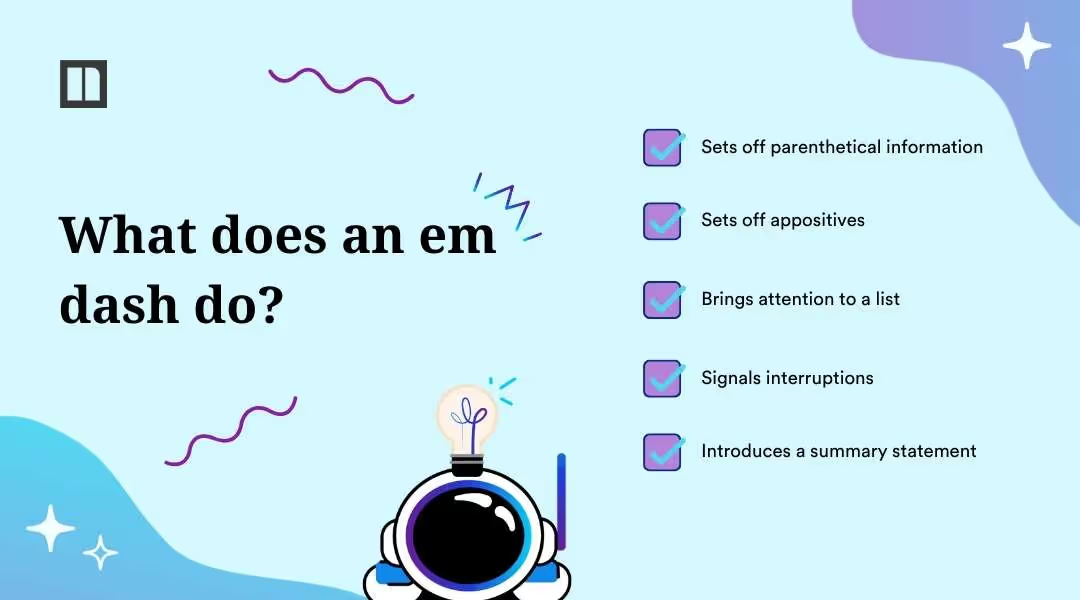
Because the em dash doesn’t appear on your computer keyboard (but is accessible with shortcuts!), people may overlook using it in everyday writing or texting. These dashes don’t get as much attention in casual writing as hyphens, en dashes (which you use for ranges, like 4–5 hours), and other punctuation marks.
Our bot friends like ChatGPT, Perplexity, and Gemini love a good em dash. But why? Aside from not having to remember the keyboard shortcut to use one, there are some other explanations as to why this punctuation mark is an AI favorite:
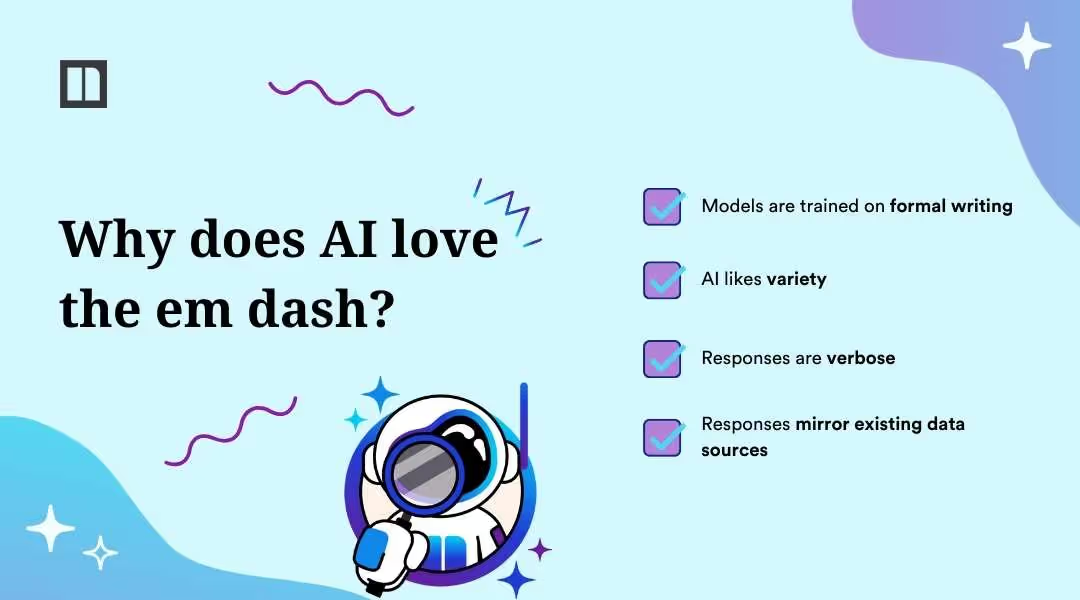
Em dashes alone aren’t a reliable sign that a text is AI-generated. AI mimics human writing. ChatGPT and other AI tools may even tell you this if you ask. Good writers use em dashes, and AI is trained to copy them.
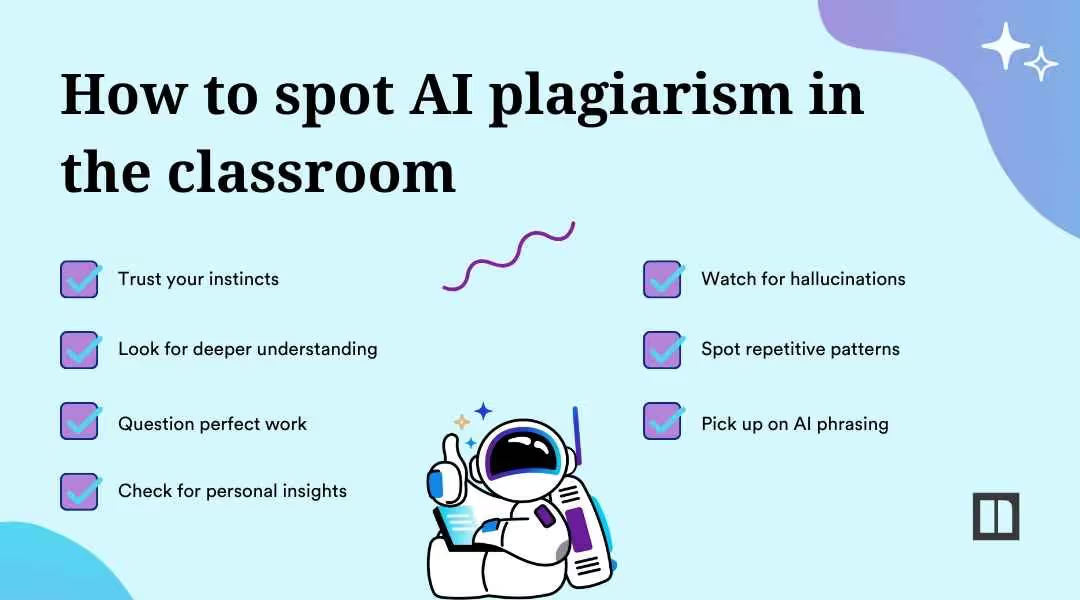
If you can’t trust the em dash as your indicator for spotting AI-generated or plagiarized work, what can you look for? Here are some tips to help you spot AI-generated content from your students:
It’s great to have a plan for how to spot and address AI plagiarism in your classroom, but wouldn’t it be better to prevent it before it starts? Here are some tips to help you address AI-cheating and use it as a motivator for students to do their best work—without relying on AI to do it for them:
Addressing AI cheating and plagiarism at the beginning of the year or at the beginning of a writing assignment is beneficial. It tells students that you’re aware of and will be looking for AI-generated submissions. But this also opens the door for a dialogue that allows students to ask questions about what counts as cheating or what uses of AI are allowed in your classroom.
To start the conversation and keep it going, try:
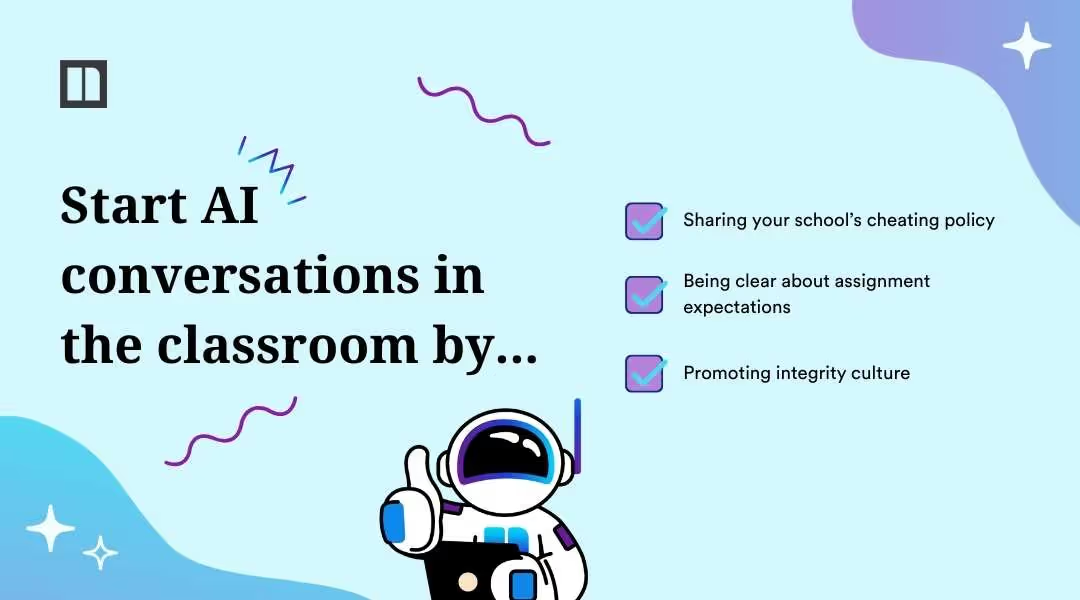
Students may be most tempted to use AI to cheat or plagiarize when under pressure. This can happen when they have an extensive assignment or one that counts for a large portion of their grade. Try these tips to revamp your assessments and assignments to make them less cheating-friendly:

Though we’ve mentioned its potential drawbacks, AI isn’t the enemy in the classroom. It’s a helpful tool for self-monitoring, time-saving, and organization when used correctly. Rather than taking an anti-AI stance with students, reframe the conversation. Teach about the benefits of AI vs. the drawbacks, and when it’s an appropriate time to use these tools.
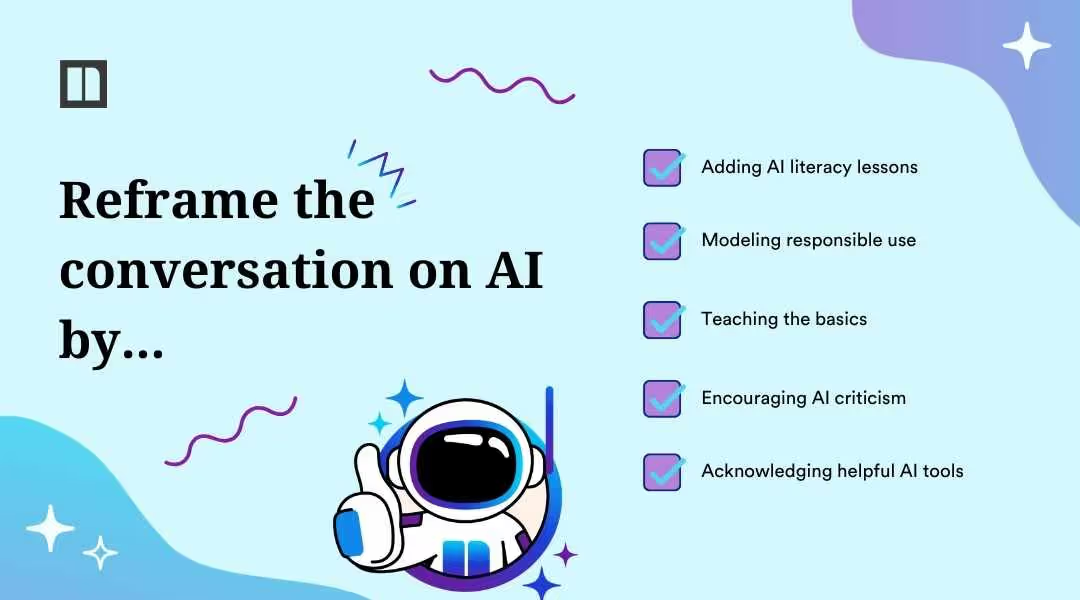
Newsela and Formative’s AI-powered teaching assistant, Luna, is an AI pal you can trust. Build assessments, create graphic organizers, translate texts, level articles, and more quickly and easily.
Whenever you see the ✨or a “Luna” tag across our products, you’ll know you’re harnessing an AI tool powered by 10+ years of education and learning science expertise. Want to know more? Discover the latest features Luna powers to make your prep and classroom experiences even better.


We’re excited to introduce Luna, your AI-powered teaching assistant, there to support lesson planning, activity design, graphic organizer creation, text differentiation, and so much more.
Got questions about Luna, our AI-powered teaching assistant? Get answers on how it supports teachers and students in Formative and Newsela.

A practical guide for K–12 administrators on AI in schools, covering policy, equity, literacy, and responsible implementation.

NEW Schoolytics by EveryDay Labs brings together student data, MTSS management, and tools to improve attendance.
Join the 30-minute live demo on November 12: 2:30pm ET/11:30am PT
NEW Schoolytics by EveryDay Labs brings together student data, MTSS management, and tools to improve attendance.
Join the 30-minute live demo on November 12: 2:30pm ET/11:30am PT
NEW Schoolytics by EveryDay Labs brings together student data, MTSS management, and tools to improve attendance.
Join the 30-minute live demo on November 12: 2:30pm ET/11:30am PT
NEW Schoolytics by EveryDay Labs brings together student data, MTSS management, and tools to improve attendance.
Join the 30-minute live demo on November 12: 2:30pm ET/11:30am PT