
Products

 Products Overview
Newsela products are purpose-built to unlock student motivation, inspire teachers, and drive long-lasting learning outcomes.









Resources
About
Products OverviewNewsela products are purpose-built to unlock student motivation, inspire teachers, and drive long-lasting learning outcomes.

Looking for meaningful ways to bring Women’s History Month books into your whole-class reading or independent novel and book selections? Newsela ELA’s Novel and Book Studies Collection has stories that feature women and girls whose stories spark discussion, empathy, and deeper understanding.
Each novel or book study includes articles, videos, and lesson ideas to help students connect what they read to their world, themselves, and other media. It helps them understand the historical, cultural, and social contexts behind the stories.
Jump to:
Key takeaways:
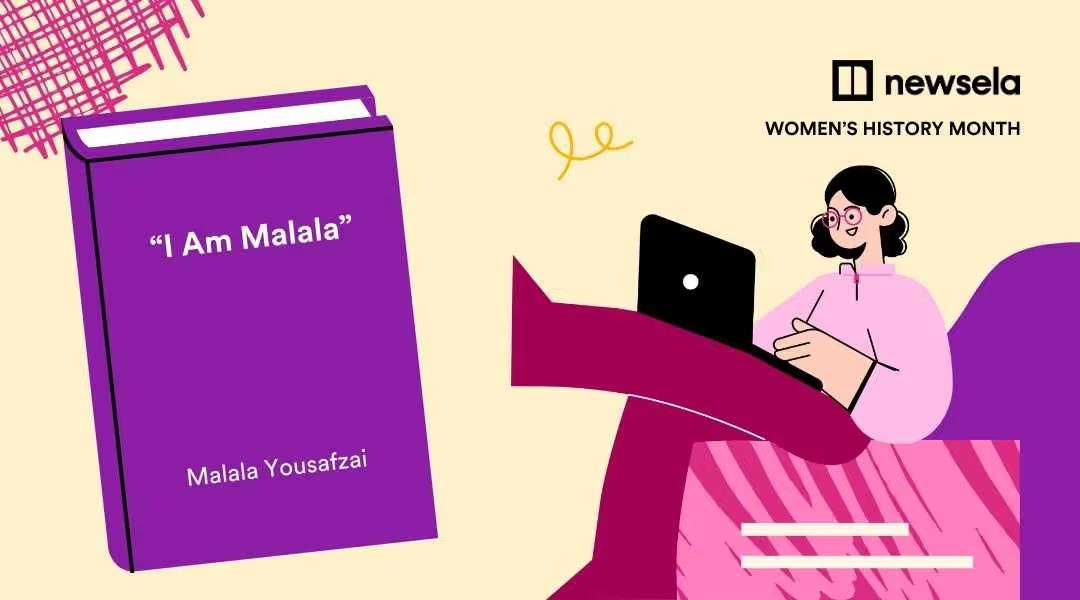
In “I Am Malala,” the title character shares her experience growing up in Pakistan under Taliban rule and her fight for girls’ education. This memoir introduces students to global perspectives through a powerful, student-accessible voice.
To help students understand Malala’s story and its context, pair the book with:
Note: This book contains references to violence and an assassination attempt.

This novel follows author Laura Ingalls Wilder’s childhood on the American frontier. It gives students insights into westward expansion and daily life in the 1800s. The book also supports discussions about perspective and historical context.
Students can deepen their understanding with resources like:
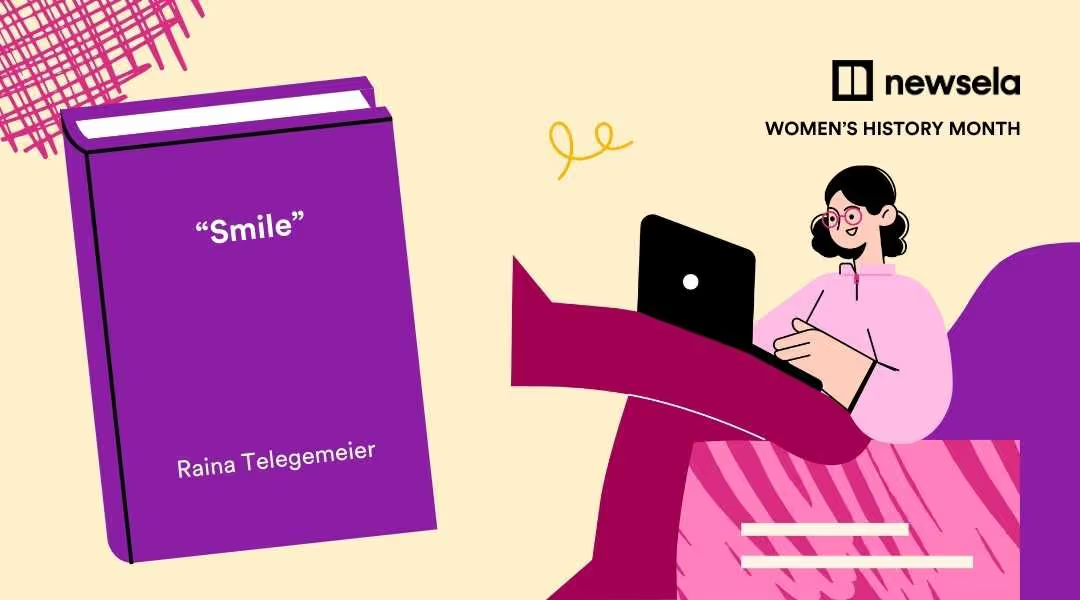
In “Smile,” Raina Telgemeier uses the graphic novel format to share her middle school experience dealing with braces and self-confidence. This book is a strong choice for reluctant readers and visual learners. Support comprehension and discussion with resources like:
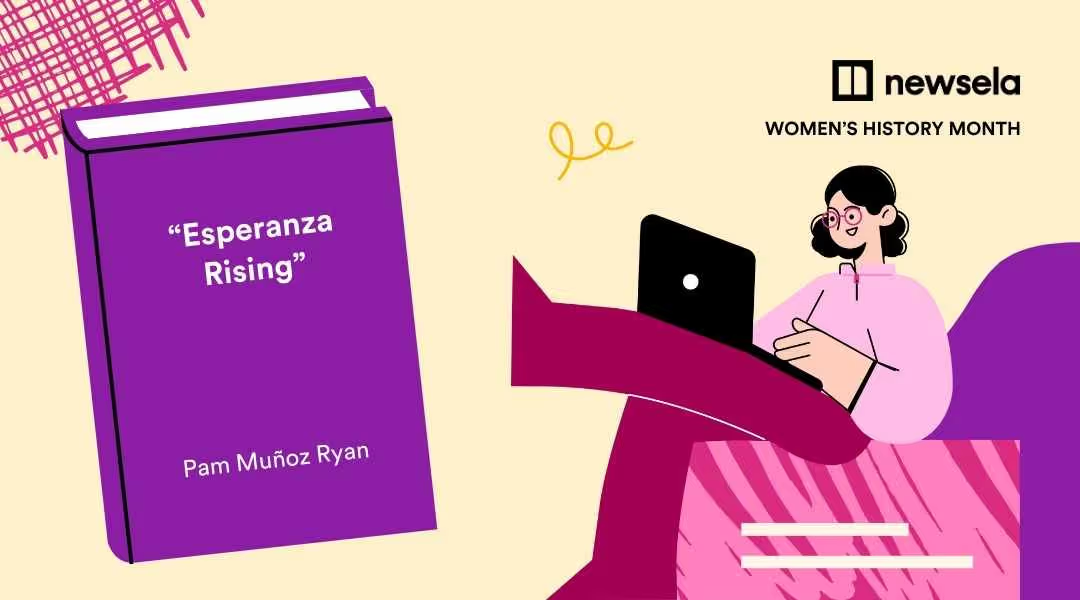
“Esperanza Rising” tells the story of a young girl forced to leave her comfortable life in Mexico and become a migrant worker in the United States. The novel supports discussions about immigration, resilience, and social class. Build background knowledge with resources such as:
Note: This book includes themes of poverty, loss, and displacement.
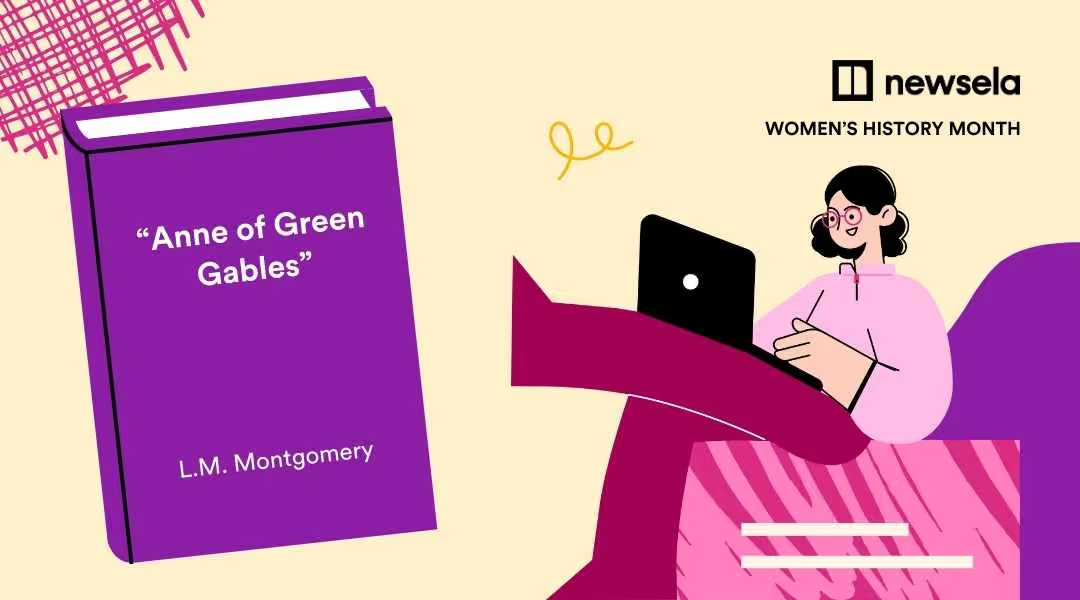
Anne Shirley’s story emphasizes imagination, belonging, and personal growth. It’s a great pick for exploring character development, friendship, and setting. You can enhance student understanding of the themes with resources like:
Key takeaways:
In this graphic memoir, Robin Ha describes immigrating from South Korea to Alabama with her mother. The book helps students explore topics like language barriers, cultural identity, and belonging. You can support learning with resources like:
Set in Nazi-occupied Denmark, this novel highlights bravery, friendship, and resistance. It’s an accessible entry point for Holocaust studies. You can build historical context and background knowledge with resources such as:
Note: This book references war, persecution, and institutional fear.
The young readers’ edition of this nonfiction book tells the true story of Black women mathematicians at NASA. Their work helped launch the space program we still operate today. This book is ideal for cross-curricular learning in ELA, social studies, and science.
Extend students’ learning with resources like:
Note: This book includes themes of racism and discrimination.

Jacqueline Woodson’s verse memoir explores childhood, race, and identity. The poetic format supports discussion on voice, memory, and personal history. Pair the book with resources like:
Note: This book includes references to racism.
Katniss Everdeen’s story allows students to examine power, sacrifice, and authority through a dystopian lens. You can support theme analysis with resources such as:
Note: This book contains violence and survival themes.
Key takeaways:
Tris Pryor’s journey challenges rigid societal structures. It makes the novel useful for examining the government’s role in society and identity. Students can explore these themes using articles on topics like:
Note: This book includes violence.

Julia’s story addresses family expectations, cultural identity, and loss. It offers ways to discuss character, theme, and analysis. You can support discussions with resources like:
Note: This book includes themes of death, mental health, and family conflict.
Marjane Satrapi’s graphic memoir provides a firsthand account of growing up during the Iranian Revolution. You can help students build context of the time period and her story with resources like:
Note: This book contains imagery of political violence and war.
In Keys’ novel, 14-year-old Lolo discovers she has telekinetic abilities and must learn how to use her gift for good. Students can learn more about the author and the novel’s themes with resources like:
Note: This book includes themes of racial injustice.
Melinda’s journey highlights trauma, silence, and healing. Students can reflect on themes and the creation of the novel by exploring resources like:
Note: This book contains themes of sexual assault and trauma and is not recommended for students below the high school grade band.
Using Women’s History Month books that align with your curriculum is just one way to keep students engaged while meeting instructional goals.
With Newsela ELA’s Novel and Book Studies, students build background knowledge, practice literacy skills in context, and explore diverse perspectives, whether they’re reading along as a whole class or devouring stories independently.
Not a Newsela customer yet? Sign up for Newsela Lite for free and start your 45-day trial. You’ll get access to our Novel and Book Studies collection and additional premium ELA, social studies, and science content and activities to take your lessons to the next level!


Explore ready-to-use women’s history month lesson plans for ELA that help students analyze texts, poetry, history, and women’s voices.

Teach students what Women’s History Month is and explore women’s roles in history using ready-to-use social studies resources.

Discover how to celebrate Women’s History Month in your science classes with a collection of resources to teach about inspiring, trailblazing scientists.


.jpg)
.jpg)