Newsela launched in 2013 with a bold mission: Meaningful classroom learning for every student. Today, our team constantly strives to deliver powerful solutions that inspire our users.
When testing season is over, classroom energy may feel unpredictable. After so much time spent “in the zone” showing what they know, students need movement, choice, and a break from screens. And you need lessons that are easy to launch and simple to manage.
Unplugged learning ideas help you finish the school year with hands-on activities that keep students reading, writing, thinking, and exploring. These print-forward ELA, social studies, and STEM options help you keep learning active until the final bell, without extra screen time.
Just press print and consider it covered.
Jump to
[Unplugged playbook: Print-and-go activities for the end of the school year](id-playbook)
Key Takeaways
●Flexible setup: Use whole group, centers, gallery walks, or choice boards based on your students’ energy that day.
●Less prep: Print-forward activities help you keep lessons moving without charging carts, logins, or tech troubleshooting.
●Ready coverage: Unplugged learning gives you a durable plan for post-testing days, substitute plans, and the final weeks of school.
Use this playbook when students need a screen break, and you need lessons that run smoothly. Pick the setup that fits your classroom energy, print the materials, and keep learning active without charging carts or tech troubleshooting.
Whole group unplugged learning is a simple way to launch a screen-free activity with everyone on the same page (pun intended). It works especially well when you want to model expectations, build momentum, and ease students into independent paper-based work.
Use the lesson flow below to start a quick routine. It gives students a clear structure and helps you move from modeling to reflection without overexplaining.
Lesson flow: Whole group unplugged learning
Move the class from teacher modeling to student reflection with one simple print-and-go routine.
1
Print and pass out
Give each student the anchor article and response sheet.
2
Model the task
Read the first section aloud and show students how to annotate or respond on paper.
3
Release the work
Have students continue on their own, with a partner, or in a small group.
4
Wrap up together
Use a quick discussion or partner share to pull together key ideas.
5
Capture the takeaway
Ask students to write one final reflection in a journal or on the response sheet.
Unplugged learning centers
Unplugged learning centers help you manage several activities at once without adding more screen time. They work well when students need movement, variety, or a way to practice different skills in the same class period.
Use the lesson plan below to set up printed stations, keep rotations clear, and give students a simple way to track their thinking as they move.
Mini lesson plan: Unplugged learning centers
Use this quick structure when you want printed stations to run smoothly with minimal directions.
Lesson goalStudents rotate through printed activities, collect ideas, and practice skills without screens.
Materials
Printed articles, prompts, or activity sheets
Student notebooks or response sheets
Timer
Station signs or table labels
Setup
Place one printed activity set at each station. Assign groups to a starting station and tell students what to record before they rotate.
Pacing
Use a 15-minute work interval at each station. Give a one-minute warning before students move.
Student task
Students read, respond, and carry their notes to the next station so their thinking builds across the activity.
Wrap-up
Ask students to choose one station response to share, revise, or turn in as their final takeaway.
Gallery walk activities
Gallery walk activities are a good fit when students need movement and a fresh way to respond to what they read. Instead of sitting with one printed text, students move around the room, gather evidence, and notice patterns across multiple sources.
Use this setup when you want students to observe, compare, and reflect without turning the activity into a full class discussion right away.
Simulated setup: Gallery walk activities
A simple loop students can follow from display to display before ending at a reflection station.
Sample classroom loop
1
Display A
Post an article, map, or short text for students to read and notice.
2
Display B
Add a prompt, image, or quote so students can compare and respond.
3
Display C
Give students one more source so they can collect evidence across the set.
4
Reflection station
Students synthesize what they noticed.
What detail stood out?
What evidence connected across displays?
What is one final takeaway?
Choice board activities
Choice board activities work well when students need more ownership over their end-of-year learning. They give students a clear menu of options while still keeping the work focused, printable, and easy to manage.
Use our sample choice board setup when you want students to pick a path, gather the matching printouts, and work at their own pace without turning the lesson into a free-for-all.
Student menu: Choice board activities
Give students a simple 3-by-3 menu so they can choose a path, collect the right printouts, and stay focused.
Sample unplugged choice board
Read and respondRead one article and answer the printed response prompt.
Sketch the ideaCreate a quick visual that shows the main idea or theme.
Find the evidenceChoose three details that support your thinking.
Partner talkCompare notes with a partner, then add one new idea.
Student commitmentCircle your path and write: “Today, I will complete…”
Quick writeWrite a short reflection, claim, or creative response.
Make a connectionConnect the text to another topic, class, or real-world idea.
Build vocabularyPick five words and explain them in your own words.
Exit reflectionTurn in one takeaway before moving to the next activity.
Teacher tip: Make a copy of the Google Slides choice board template, then customize it with your own articles, prompts, and printouts.
[Unplugged learning activities by subject](id-activities)
Key Takeaways
●ELA: Use writing prompts and journals to help students turn end-of-year energy into creative reflection.
●Social studies: Use country spotlights to help students explore geography, culture, and global connections through print-forward activities.
●STEM: Use hands-on science challenges so students can investigate, record findings, and stay curious without added screen fatigue.
Use these subject-specific unplugged learning ideas to keep students engaged after testing and through the final weeks of school. Each option gives students a hands-on way to read, write, explore, and reflect without relying on screens.
For more ideas on how to instructionalize these activities, check out the video explainers from our education experts!
ELA: Writing in the wild
For ELA, unplugged learning can help students turn end-of-year energy into creative writing. Instead of moving through another digital task, students write by hand, reflect on their own experiences, and build a small portfolio of ideas.
The 30-Day Write Challenge works well for this. Students choose a prompt, write in an “Unplugged Journal,” and collect their responses in one place.
ELA activity hub: Writing in the wild
Use the video for a quick walkthrough, then choose the grade-band collection and printable that fit your students.
Grab the ELA collections and printables
Open the digital collection to preview the activity path. Download the printable when you’re ready to make the lesson screen-free.
Elementary
Use this version for younger writers who need playful, concrete prompts and room to build confidence.
Brain break bonus: Have students keep an “Unplugged Journal” so they can collect their writing prompts and see their growth by the last day of school.
Watch the choice board walkthrough
Use this video to see how the ELA choice board can support student writing, reflection, and screen-free creativity.
Social studies: Around the world in 20 days, weekly country spotlights
For social studies, unplugged learning can turn the final weeks of school into a global learning journey. Students explore geography, culture, and daily life through country spotlights, printed activities, and tactile maps.
The Around the World in 20 Days Challenge gives students a steady routine without screen time. They can read, annotate, compare countries, and add their learning to a class map or passport-style tracker.
Social studies activity hub: Country spotlights
Use the video for a quick walkthrough, then open the country spotlight collection to build a print-forward global learning routine.
Grab the social studies collection
Use the country spotlights to help students explore a new place through geography, culture, and real-world connections.
Search the full Country Spotlights collection, choose the countries you want students to explore, and print the materials for stations, a gallery walk, or a weekly challenge.
Brain break bonus: Create a “Passport Wall.” As students complete each weekly Country Spotlight, have them color in a printable paper stamp to post on a classroom map.
Watch the stations walkthrough
Use this video to see how the Around the World in 20 Days activity can work as a station-based social studies routine.
STEM: Lab coats optional, 30 days of hands-on science challenge
For STEM, unplugged learning gives students a hands-on way to stay curious when screen fatigue is high. Students can investigate, record findings, and connect science concepts to real observations without needing another digital activity.
The 30-Day Science Challenge works well as a print-forward routine. Pair the articles with simple experiments, then have students document what they notice, wonder, and learn on paper.
STEM activity hub: 30 days of hands-on science
Use the video for a quick walkthrough, then open the digital collection or download the printable challenge to run a screen-free science routine.
Grab the STEM collection and printable
Use the 30-Day Science Challenge to pair hands-on exploration with print-ready articles and student reflection.
Open the collection to preview the challenge, then download the printable when you’re ready to run the activity offline.
Brain break bonus: Print articles at different reading levels for each station so students can work with the same experiment while reading at the level that fits them best.
Watch the whole group science walkthrough
Use this video to see how the 30-Day Science Challenge can support hands-on science, paper-based response, and student inquiry.
[Unplugged learning FAQs](id-faq)
Have questions about unplugged learning? We have answers! Use these frequently asked questions to learn about what unplugged learning is, when it works best, and how to make it easy to run.
Unplugged learning FAQs
Use these quick answers to plan screen-free lessons, print-forward activities, and end-of-year routines that still feel purposeful.
What is unplugged learning?
Unplugged learning is a screen-free or print-forward way to keep students reading, writing, discussing, creating, and exploring. It often uses printed texts, response sheets, journals, maps, stations, or hands-on materials instead of laptops or tablets.
Why does unplugged learning work at the end of the school year?
At the end of the school year, students often need movement, choice, and a break from screens. Unplugged learning helps you keep lessons structured while giving students a more tactile way to stay engaged after testing and before summer break.
How can teachers use unplugged learning after state testing?
You can use unplugged learning for whole group lessons, centers, gallery walks, choice boards, substitute plans, or multi-day challenges. The goal is to make the lesson easy to launch, easy to print, and easy for students to follow.
Which subjects work well for unplugged learning?
Unplugged learning can work across subjects. ELA activities can focus on writing and reflection. Social studies activities can use maps, country spotlights, and evidence gathering. STEM activities can pair hands-on investigations with printed articles and observation sheets.
How do you keep unplugged learning organized?
Keep the routine simple. Print materials ahead of time, label stations or folders, give students one clear task, and use journals or response sheets to collect their work. A short reflection at the end helps students connect the activity back to the learning goal.
Grab your Newsela Unplugged printable kit
The last weeks of school don’t need to feel like a countdown with filler work. With unplugged learning, you can keep students reading, writing, moving, and exploring while giving everyone a needed break from screens.
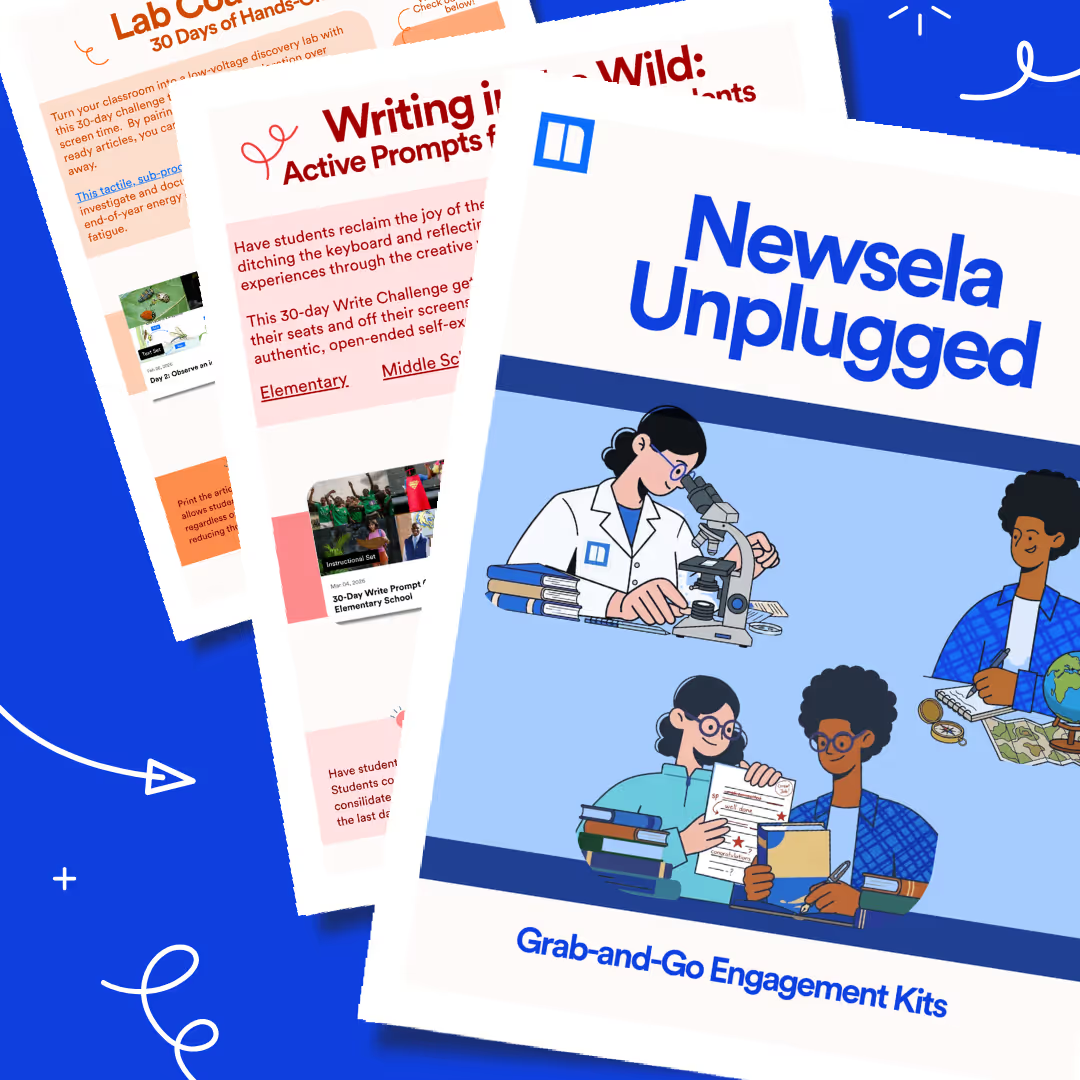
Newsela Unplugged, a printable engagement kit, gives you ready-made ELA, social studies, and STEM activities that are easy to take offline and simple to run. Snag your kit today and keep students engaged through the final bell.
Everything you need to accelerate learning across ELA, social studies, and science
Browse more educational and seasonal content from Newsela.
Blog
From Screens to Student Outcomes: Reframing the EdTech Debate
With cellphone bans and debates about classroom screen time gaining significant momentum, teachers, parents, and education leaders are not just debating tools; they’re rethinking instruction itself. At the center of these conversations is a shared belief: learning must be intentional, effective, and grounded in student needs. At Newsela, that belief is our foundation. Our mission as an education company remains unchanged: Meaningful classroom learning for every student, every day.
Engaging Summer Reading Selections for Every Grade Band
Discover summer reading recommendations for elementary, middle, and high school students and resources to help make the themes of the stories come alive.
Unplugged Learning for the End of the School YearKeep students engaged after testing with unplugged learning kits for ELA, social studies, and STEM. Print, teach, and finish strong.Oct 13, 2026Oct 08, 2026https://cdn.prod.website-files.com/66f182e7ce15762d01b32e09/6748a6a5efe4fcaff3b28d51_How-To-Keep-Students-Engaged-Until-Summer-Break-hero.avifhttps://cdn.prod.website-files.com/66f182e7ce15762d01b32e09/67f6a583569aaf7f90956837_67cf349c9d5f65bef1f9cc43_Keep%2520Students%2520Engaged%2520Until%2520Summer%2520Break%2520Blog%2520Hero%2520Image%2520.avifChristy Walters



 Products Overview









.avif)




.jpg)
.jpg)