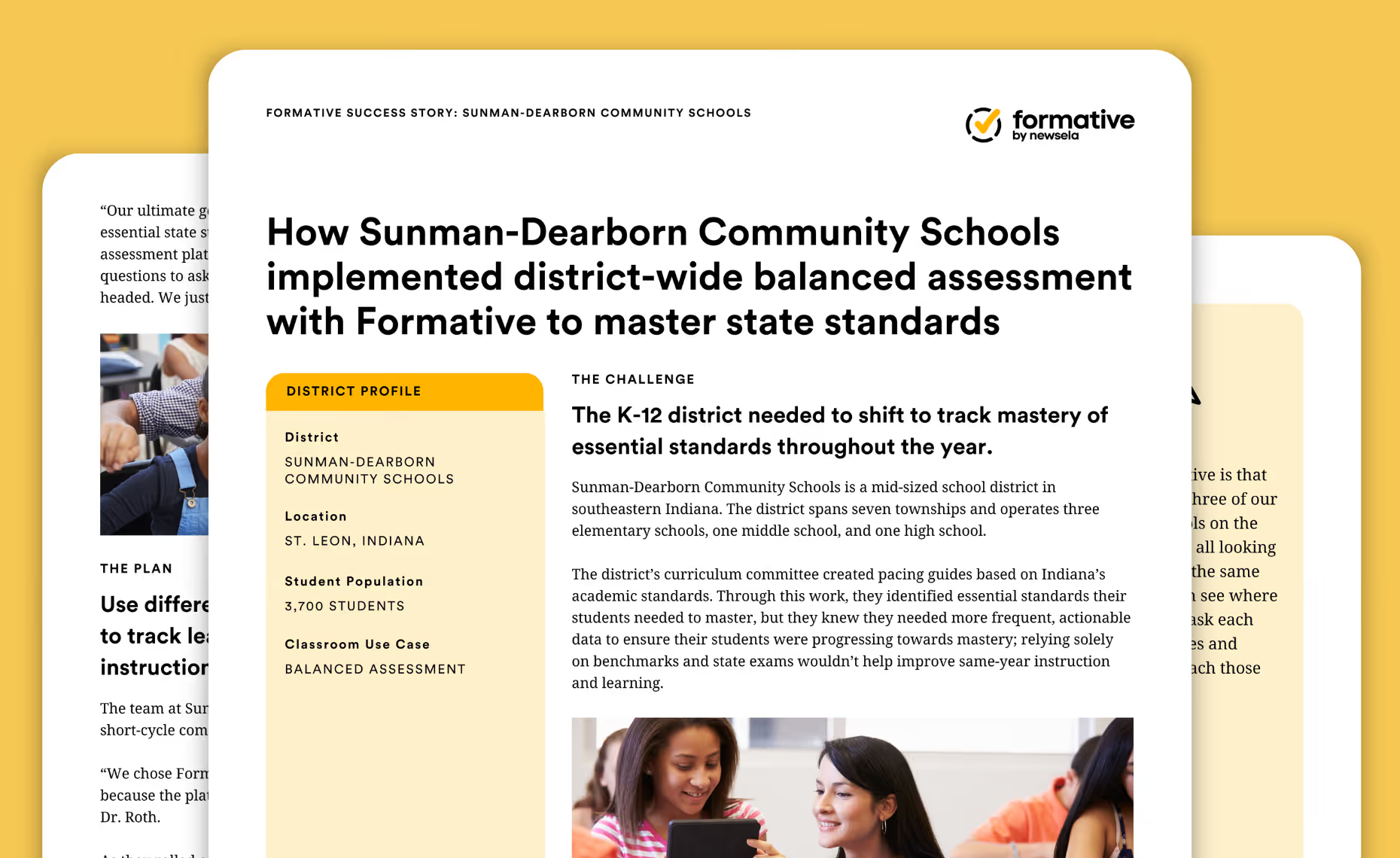
Sunman-Dearborn Community Schools is a mid-sized school district in southeastern Indiana. The district spans seven townships and operates three elementary schools, one middle school, and one high school.
The district’s curriculum committee created pacing guides based on Indiana’s academic standards. Through this work, they identified essential standards their students needed to master, but they knew they needed more frequent, actionable data to ensure their students were progressing towards mastery; relying solely on benchmarks and state exams wouldn’t help improve same-year instruction and learning.
The team at Sunman-Dearborn selected Formative by Newsela to launch their short-cycle common assessment strategy.
“We chose Formative because of the ease of use from a teacher’s perspective, and because the platform allows differentiation and different assessment types,” said Dr. Roth.
As they rolled out the tool across the district, the curriculum committee established the expectation that teachers would use Formative for their common assessments on essential standards. They didn’t want to sacrifice too much instructional time to testing, so they created 20-minute assessments to be administered throughout a unit. Students had to achieve 80% on a given standard to progress in the unit.
Once teachers began to understand how using Formative to deliver the common assessments could help guide short-cycle, data-driven instruction, they began using the tool for formative assessments throughout their daily lessons.
“It’s grown exponentially in the last couple of years. We now see regular use [of Formative] in the classroom for quick checks for understanding, daily assessments, small group activities, and practice sets,” shared Dr. Roth.
Teachers across grade bands use Formative. At the elementary level, third-grade teacher Brenda Stewart reflected on the impact of a flexible tool for their common assessments:
“The biggest positive is that we now have all three of our elementary schools on the same page. We’re all looking at the same data, the same questions. We can see where the gaps are and ask each other for resources and materials to re-teach those areas. It really holds us accountable to make sure we’re all teaching the standards and students are progressing through them.”