
Products

 Products Overview
Newsela products are purpose-built to unlock student motivation, inspire teachers, and drive long-lasting learning outcomes.







Resources
About
Products OverviewNewsela products are purpose-built to unlock student motivation, inspire teachers, and drive long-lasting learning outcomes.

You students likely don’t need convincing to care about fandoms, and Star Wars is one of them. These Star Wars Day activities give you a way to turn their excitement into something useful in your classroom.
Build in reading, writing, and science skills without forcing engagement. Start with something they already love and layer in the learning.
Jump to:
Key takeaways:
Whether they’ve seen the movies, a TV show, or played a video game, students already know the Star Wars characters, conflicts, and world. You can spend less time building context about the franchise and more time using it to hook them for building real literacy skills.

You can use Star Wars to show how stories move beyond the screen and shape real-world culture. Students see the movies as entertainment, but this is a chance to show how ideas, symbols, and communities grow from them.
Have students look at how Star Wars shows up in everyday life, from sports to belief systems to fashion. This helps them connect media to real-world influence and understand why some stories last. To build that understanding, use resources like:
You can use Star Wars as a model to get students writing without the usual hesitation. They already understand the world, so they can focus on building characters, settings, and conflicts instead of starting from scratch.
Start by showing examples of fantasy and sci-fi writing, like.
Then have students create their own scene, incorporating elements such as advanced technology, unfamiliar worlds, or high-stakes conflict. To build background knowledge on topics and themes that students may use in their writing, share resources on topics like:
Key takeaways:
Star Wars is a cultural touchpoint you can use to teach bigger ideas in social studies. You can connect it to storytelling traditions, cultural influence, and how media shapes society. Since students are already familiar with the characters and plot, you can focus on analysis instead of background knowledge.

You can use the first Star Wars film to introduce storytelling and cultural influence. Students may already know the characters, but this helps them understand why the story works and why it’s lasted.
Focus on how the film follows familiar story patterns and how it shaped culture beyond the screen. Then have students apply those ideas through discussion and writing. To build understanding, use resources on topics like:
Key takeaways:
Star Wars and science fiction stories lead to real-world science questions. Students already wonder things like how planets work, how creatures age, and whether futuristic technology is possible.
Use that curiosity to explain and explore the topics they care about and guide them toward the real science behind it.
Different species age at different rates. Age 50 might be early childhood for one species and old age for another. This gives you a simple way to introduce life cycles, aging, and how scientists compare species.
Have students compare animals with different life spans and explain why those differences exist. Then connect it back to how a character like Grogu could still behave like an infant. You can follow this lesson sequence to work through this topic:
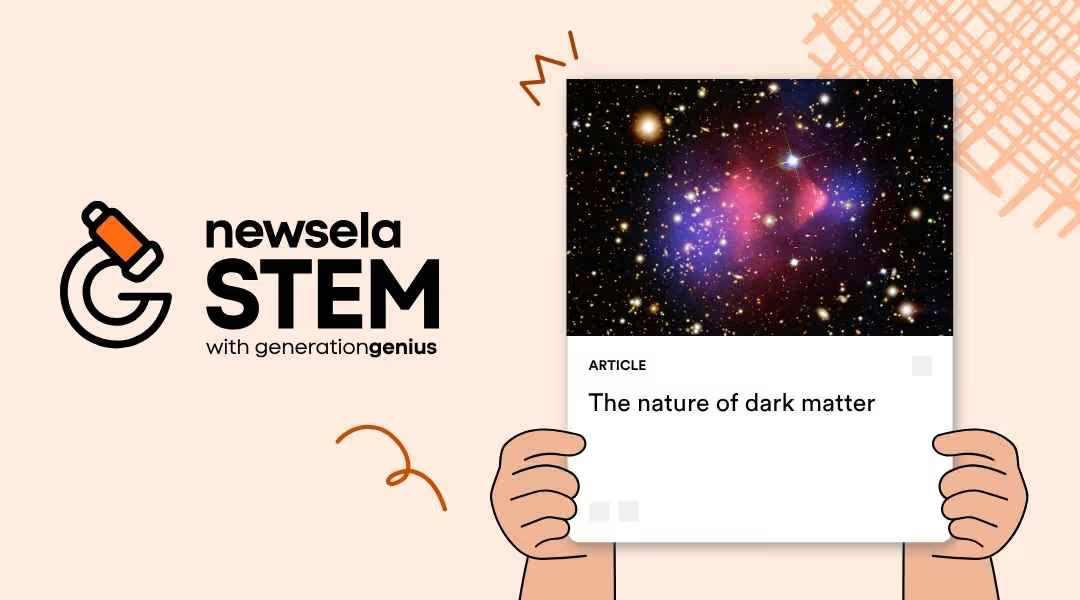
You can use Star Wars to introduce big space concepts to students. The planets, galaxies, and travel between them give you an easy way to talk about how the universe actually works.
Focus on questions that students might already have, like what’s in space, how do we study it, and why is there still so much we don’t know? Then you can connect those ideas to real discoveries, such as:
When you’re talking about Star Wars with students, robots and AI will likely come up. They may wonder how similar droids are to real robots, and what their limits are.
Have students compare fictional robots to real-world technology. Then push them to think about where AI helps, where it replaces human work, and where we might need boundaries. To build their understanding of the topics, use resources on topics like:
As Yoda says, “Truly wonderful the mind of a child is.” Help expand your students’ minds with Newsela’s subject products by introducing them to the best content and activities to build background knowledge, practice literacy skills in context, and explore diverse perspectives on topics they care about.
If you’re not a Newsela customer yet, you can sign up for Newsela Lite and start your free 45-day trial to try our premium differentiated content and activities!

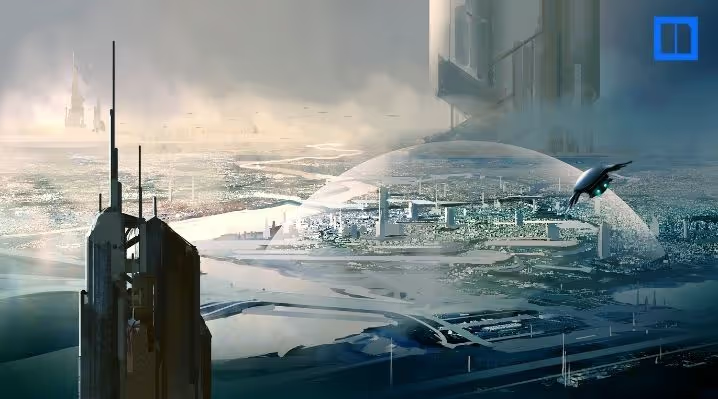
Discover 18 science fiction novels to share with your students in honor of National Science Fiction Day on January 2.

Discover how to grab students’ interest with ELA and science activities for National Science Fiction Day on January 2.

Explore National Robotics Week classroom activities with STEM articles, videos, and debates to engage students across grade levels.



.jpg)
.jpg)