
Products

 Products Overview
Newsela products are purpose-built to unlock student motivation, inspire teachers, and drive long-lasting learning outcomes.








Resources
About
Products OverviewNewsela products are purpose-built to unlock student motivation, inspire teachers, and drive long-lasting learning outcomes.

Asian American Pacific Islander (AAPI) Heritage Month is a great time to bring real scientists' stories and findings into your classroom. You can plug information about them right into what you already plan to teach. Show students people who are shaping STEM today, like AAPI scientists, young inventors, and real-world researchers.
Jump to:
Key takeaways:
AAPI scientists are shaping the world your students live in right now. You don’t need to do extra work to bring their discoveries and leadership into your classroom. Instead, layer examples into lessons you already plan to teach.

Students can see how science shows up in real life through inventions, problem-solving, and everyday impact. It also helps them understand that innovation can come from anywhere, not just from the names of scientists they already know.
Dig into the world of AAPI scientists who make a difference with articles on topics like:
Fei-Fei Li helped advance AI by working with “big data,” which enables computers to process large amounts of information quickly. That shift is a big reason AI tools work the way they do.
You can use her story to make the workings of AI feel less abstract and give students a chance to learn about a real person behind the technology. Introduce the topic with resources like:
Key takeaways:
Students may not think of themselves as scientists. But that can change when they meet people their own age doing real work. Show your students examples of real school-aged young people solving real problems to spark questions and inspiration.
Young AAPi scientists are already tackling big challenges. From cancer research to water safety, these students are using STEM to solve problems that matter right now. To help students see that their ideas can matter and have an impact, introduce articles on topics like:
Key takeaways:
You don’t need to take an in-person field trip to make science feel real. A virtual trip can bring earth science to life while also building context around Pacific Islander communities and the environments they live in.
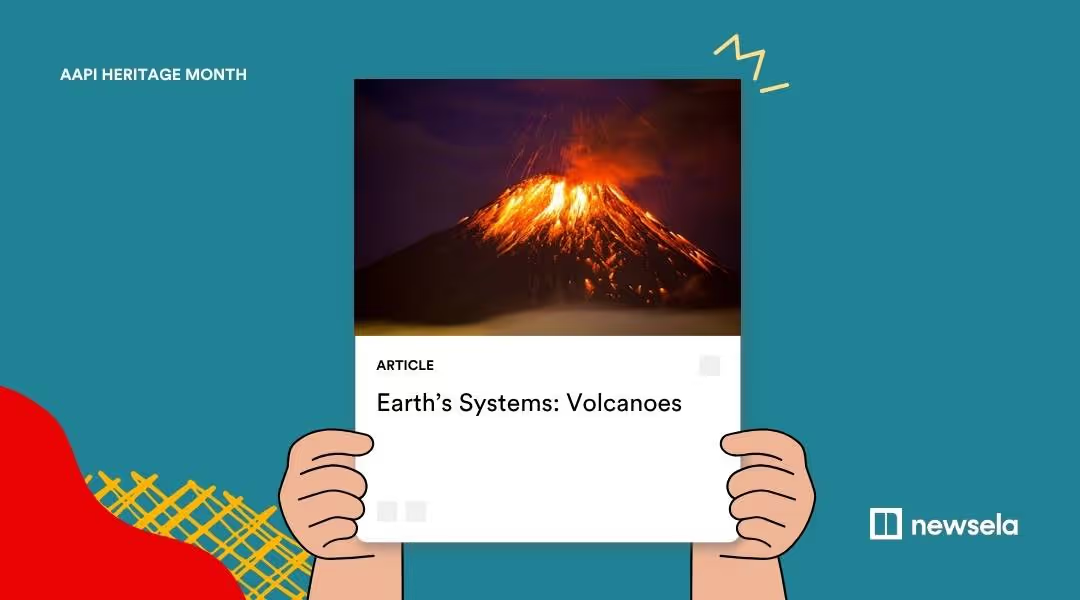
Start with the science students can see. Volcanoes are visual and active. After a demonstration, show students how they form, behave, and impact the people who live nearby. That combination helps your class understand both the science and the human side of the story.
To bring your field trip to life, use resources like:
AAPI scientists shouldn’t only show up in your lessons during May. Their stories and findings fit into lessons you teach all year, like technology, health, and earth science. When you bring in real people and real work, students stay more engaged. And they start to see science as something they can be part of, too.
With Newsela STEM, you get ready-to-use content that makes this easy. Articles, videos, and activities come with multiple reading levels, built-in supports, and assessment tools so you can focus on teaching, not on lesson prep.
Not a Newsela customer yet? Sign up for an account to start your 45-day free trial of all our premium product features.


Explore AAPI heritage with ELA lessons, texts, and activities that help students build background knowledge and connect culture to literacy.
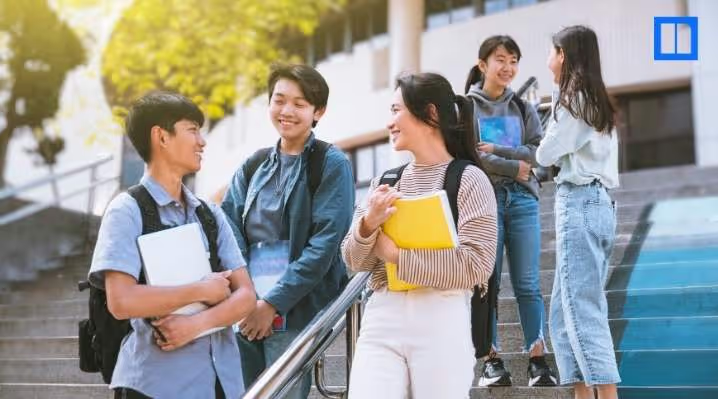
Teach students what AAPI Heritage Month is and why it’s so important with curated lessons for your social studies classes.
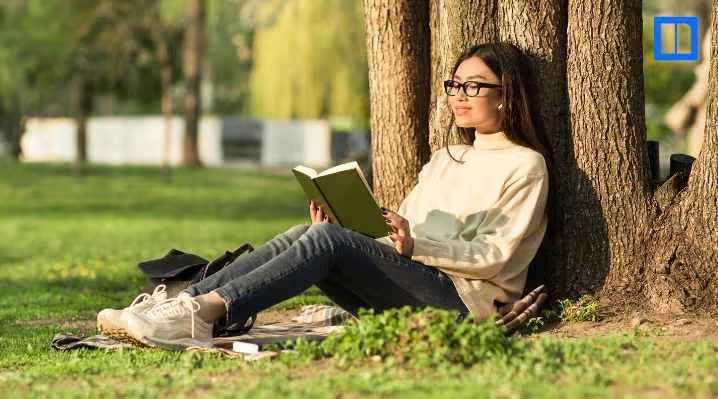
Explore AAPI books for your classroom. Build background knowledge with ready-to-use resources that support student understanding and engagement.


.jpg)
.jpg)