Products

 Products Overview
Newsela products are purpose-built to unlock student motivation, inspire teachers, and drive long-lasting learning outcomes.









Resources
About
Products OverviewNewsela products are purpose-built to unlock student motivation, inspire teachers, and drive long-lasting learning outcomes.

Cinco de Mayo is more than a celebration. It’s a chance to connect history, culture, and literacy across your classroom.
You can use these Cinco de Mayo activities for students on and leading up to May 5 to celebrate Mexican heritage, hear from those who celebrate, and build them into social studies and ELA lessons without adding extra work.
Jump to:
Key takeaways:
Students need context before they can do anything meaningful with a topic like Cinco de Mayo. Especially if your students don’t recognize or celebrate this holiday at home, you’ll need to build background in a way that actually sticks before diving into a lesson.
These activities help you move into a real understanding of history, culture, and how people view the holiday in different parts of the world.
In the United States, Cinco de Mayo celebrations often focus on recognizing and embracing Mexican culture. In Mexico, this is a smaller, more regional holiday tied to the Battle of Puebla. That contrast gives you a way to teach comparison, perspective, and historical context.
To help students see those differences clearly, use resources that show both the holiday's history and how celebrations look today. Try:
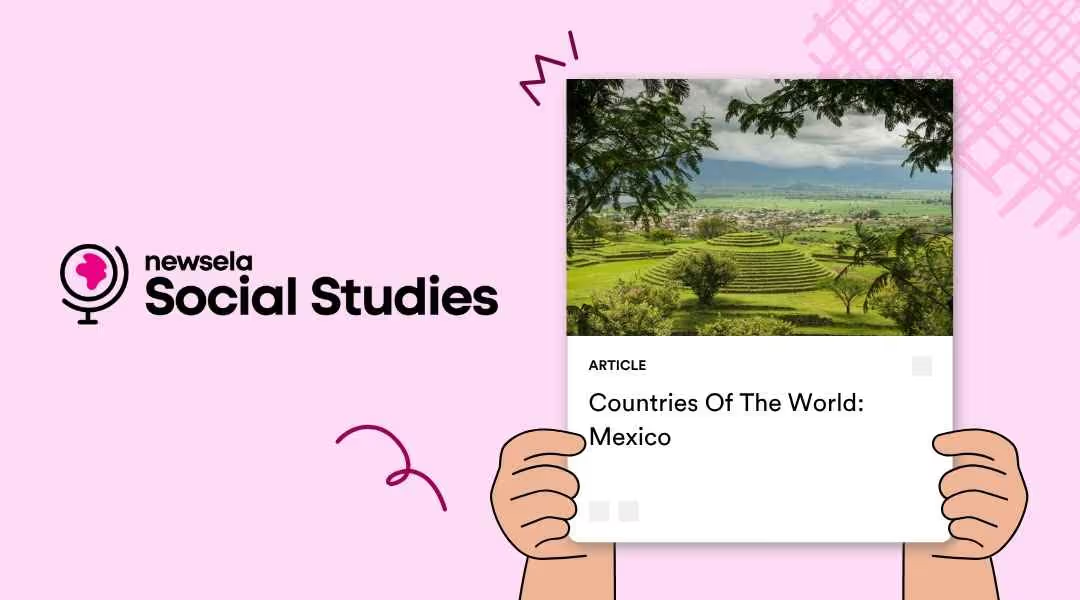
Cinco de Mayo is a great introduction to Mexico and its culture, but it’s not the whole story. Students need a broader view of Mexico’s past and present history to achieve a one-day understanding of the whole country.
To build that bigger picture, bring in resources that show how Mexico functions today and how it’s evolving. Try articles on topics like:
Key takeaways:
You don’t need to pause your ELA pacing to recognize and celebrate Cinco de Mayo in your classroom. With ready-made content for reading, writing, and analysis, you can slot in activities and lessons that still align with your standards.
These activities help you keep skill-building front and center while giving students something meaningful to work with.
Combine video, text, and cultural context into a single lesson using Cinco de Mayo resources. It makes it easier to teach students how format shapes understanding, and not just what they learn, but how they learn it.
To guide that work, structure it step-by-step with the following lesson:

Storytelling is a core way people share identity, history, and values across generations. When students see that through art, film, and media, they understand that culture is something that’s lived. To make the concept concrete, use resources that show storytelling in different formats, like:
Students can connect Cinco de Mayo to real people, movement, and decisions. It helps them see immigration as part of history and everyday life. To build that understanding, bring in sources that show different types of journeys and their impact. Try:
Cinco de Mayo is a great seasonal moment to engage your students in Mexican culture and the world of bilingual education. But it doesn’t have to be the only moment for these activities.
With Newsela products, you can support Spanish-speaking English language learners (ELLs) or supplement teaching Spanish to English speakers with thousands of translated articles on various topics. Highlight articles that showcase Latin American countries such as Mexico, Colombia, Ecuador, Chile, and more.
If you’re not a Newsela customer yet, you can create an account and start your free 45-day trial to explore a taste of our premium differentiated content and engaging formative assessments.


Use these Hispanic Heritage Month lesson plans to help students explore authors, poetry, paired texts, and Hispanic culture in ELA.

Discover best practices you can use in the classroom to better support and differentiate content for English language learner students.
.avif)
Discover educational videos for kids across STEM, ELA, and social studies. Find engaging classroom videos for K-12 students you can use right away.